 how-to
Motor Bike Second Hand for Sale: 2026 Buyer's Guide
Table of Contents
- Where to Find a Motor Bike Second Hand for Sale
- Choosing a Bike by Experience and Intended Use
- Your Used Motorcycle Inspection Checklist
- Questions to Ask When Buying a Used Motorcycle
- Used Motorcycle Price Comparison and Total Cost
- Title, Registration, and Vehicle-History Checks
- How to Buy a Second Hand Motorbike Safely
- Frequently Asked Questions
Last Updated: October 15, 2026
Where to Find a Motor Bike Second Hand for Sale
Shopping for a motor bike second hand for sale works best when you know which channel fits your budget and patience level. Dealers offer reconditioned inventory with paperwork handled, while private sellers often list lower asking prices but leave every check to you. This guide from Flemington Powersports walks through both routes, plus the inspection and title steps that protect your money.
The two channels differ in ways that matter more than price.
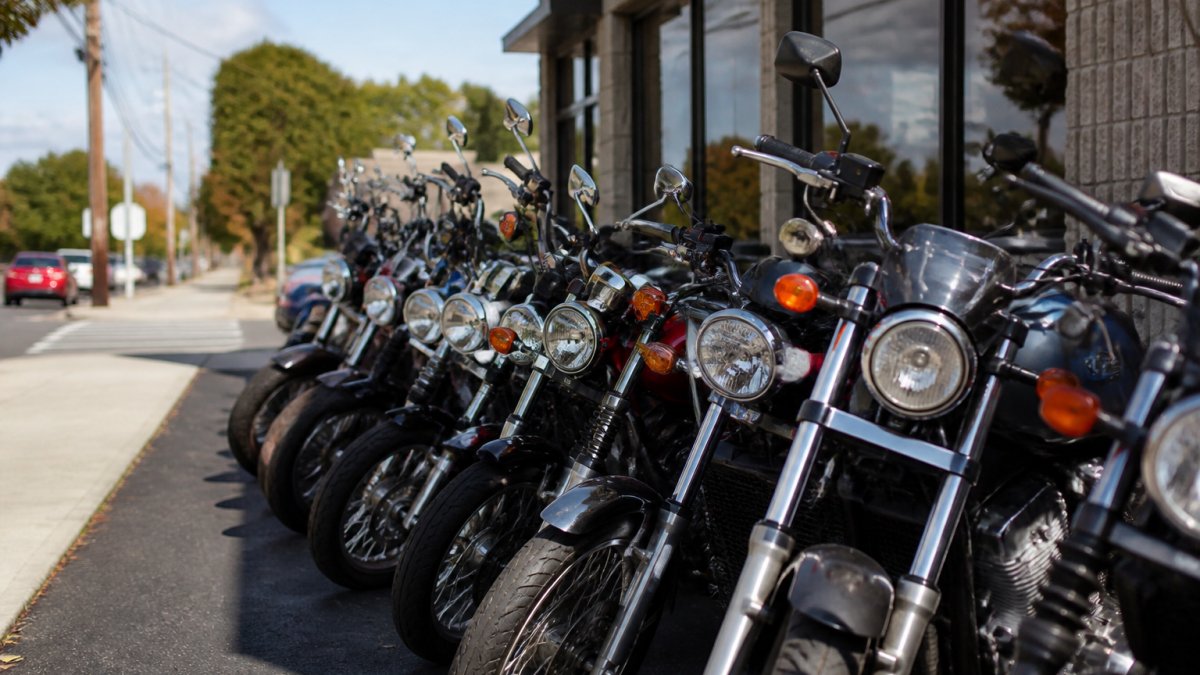
Dealer Inventory vs. Private Listings
A dealership pre-owned motorcycle comes with a reconditioning process, a clear title, and a person to call when something goes wrong. Private listings usually cost less upfront, but you absorb the risk of hidden damage and paperwork gaps.
- Dealer inventory: inspected bikes, financing available, trade-ins accepted, staff on hand for questions
- Private sellers: lower asking prices, no warranty, cash-only transactions, you verify everything
- Marketplace apps: wide selection, but listings go stale fast and sellers can be hard to reach
A common mistake is chasing the cheapest private listing without budgeting for immediate repairs.
Filtering Local Inventory by Category and Price
Most dealer sites let you browse inventory by vehicle category, make, model, and price range. Use those filters aggressively. Narrow to sport motorcycle, cruiser motorcycle, dirt bike, street bike, scooter, ATV, or UTV, then set a price ceiling and sort by newest arrivals.
Before driving anywhere, call or text to confirm the unit is still in stock and ask for current photos.
Choosing a Bike by Experience and Intended Use
The right second-hand bike depends far more on your experience level and riding plans than on the badge on the tank. A first-time rider and a returning rider need different machines.
Match the bike to the job:
- New riders: lighter street bikes or scooters in the 250cc to 400cc range, upright seating, manageable weight
- Commuters: mid-size street bikes with good fuel economy and comfortable ergonomics
- Weekend riders: cruiser motorcycle or sport motorcycle depending on whether you want relaxed or aggressive
- Off-road riders: dirt bikes sized to your height and skill, not your ego
- Property owners: utility ATVs and UTVs with plow mounts for winter maintenance
Sit on the bike before you fall in love with the listing photos. Seat height and handlebar reach decide whether you actually enjoy riding it.
Your Used Motorcycle Inspection Checklist
A used motorcycle inspection checklist is your best defense against buying someone else's problem. Run through it in daylight, with the engine cold, before any money changes hands.
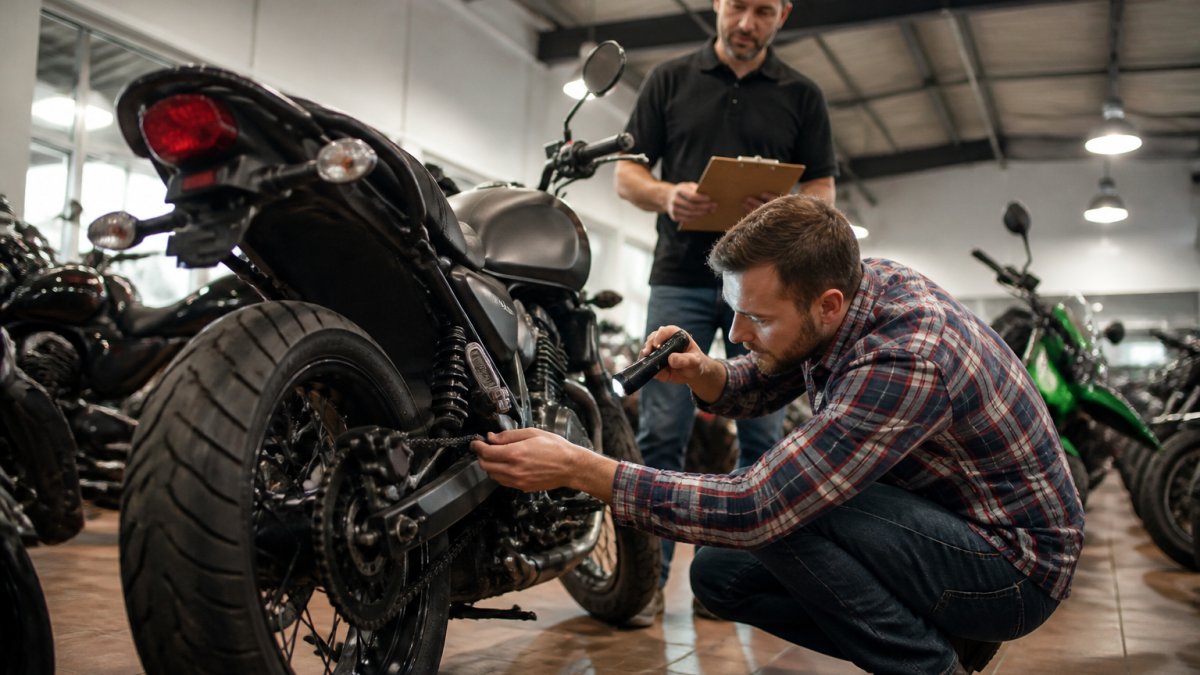
Work through these in order:
- Tires: tread depth, cracking, uneven wear, correct pressure
- Chain and sprockets: slack, rust, hooked teeth
- Brakes: pad thickness, rotor scoring, lever feel
- Leaks: engine cases, fork seals, coolant and oil residue
- Frame and forks: dents, cracks, mismatched paint from repairs
- Odometer reading: consistent with wear on grips, pegs, and seat
- Electrical: lights, turn signals, horn, instrument cluster
- Cold start: how it idles and whether it smokes
What to Check Before the Test Ride
Cold-start behavior tells you more than any seller's story.
Confirm the seller has a valid title in their name before you ride. Then check that the brakes bite, the transmission shifts cleanly through the gears, and the bike tracks straight with your hands light on the bars.
Questions to Ask When Buying a Used Motorcycle
The questions to ask when buying a used motorcycle should cover history, paperwork, and why it is for sale.
Ask directly:
- How long have you owned it, and how many owners before you?
- Do you have the title in hand, and is it in your name?
- Has it ever been dropped, crashed, or rebuilt?
- When were the valves checked and the fluids last changed?
- Are there service records, and can I see them?
- Why are you selling it?
Used Motorcycle Price Comparison and Total Cost
A used motorcycle price comparison should look past the asking price and total up what you will actually spend in the first year.
What Drives the Asking Price
Two bikes of the same year and model can sit thousands of dollars apart. The usual reasons:
- Mileage and service history. Documented valve checks, fluid changes, and chain maintenance support a higher ask.
- Condition and cosmetics. Dropped bikes, cracked plastics, and rusted fasteners cost money to correct and are hard to hide.
- Title status. A clean title in the seller's name supports full value. A rebuilt, salvage, or bonded title reduces it, sometimes sharply, and complicates resale.
- Season and demand.
- Original parts. A bike sold with its stock exhaust, seat, and levers is usually easier to resell than one stripped of them.
Estimating First-Year Ownership Cost
Beyond the purchase price, plan for:
| Cost Category | What to Compare | Why It Matters |
|---|---|---|
| Asking price | Dealer vs. private listing | Sets your starting point |
| Reconditioning | Tires, chain and sprockets, brakes, fluids, battery | Often the largest surprise in the first season |
| Financing | Rate, term, total of payments | Changes total cost significantly |
| Insurance | Category, engine size, rider history | Sport bikes and larger displacements usually cost more |
| Registration, title, and tax | State and local fees | Required before you ride legally |
| Gear | Helmet, jacket, gloves, boots | Non-negotiable safety spend |
| Consumables | Oil, filters, chain lube, tires over time | Recurring, not one-time |
A common pattern is that a cheaper private bike with deferred maintenance ends up costing more in the first year than a reconditioned dealer unit with a higher sticker.
Negotiating the Price
Negotiation works better when you bring facts rather than feelings:
- Know the market range for the year, model, and mileage before you make an offer.
- Document the defects. A worn rear tire, a leaking fork seal, or a missing tool kit are concrete reasons for a lower number.
- Ask what is included. A fresh service, a new battery, or a set of tires changes the effective price.
- Separate price from fees. Ask for the out-the-door total in writing so tax, title, and documentation fees do not appear at signing.
- Be ready to walk. The strongest negotiating position is being willing to buy a different bike.
Financing, Trade-Ins, and Monthly Payments
Financing turns a lump sum into a monthly payment, which makes a better bike reachable but raises the total you pay. Ask for the rate, the term length, and the total of payments, not just the monthly figure.
A trade-in can offset your down payment and simplify the paperwork. Many dealers offer trade-in valuation services, so get that number before you decide which route to take. Bring the title, both keys, and any service records to the appraisal.
For current pricing on any specific unit, check our website or request a quote, since figures move with condition, mileage, and demand.
Title, Registration, and Vehicle-History Checks
Title and history checks confirm the bike is legally yours to buy and has not been written off, stolen, or rebuilt from salvage.
Verify these before payment:
- Title: matches the seller's name, no lien listed, no salvage branding
- VIN: on the frame matches the title and the paperwork
- History report: check for accidents, theft, and odometer discrepancies
- Registration: current, or you may owe back fees
- Bill of sale: signed, dated, and listing the VIN and purchase amount
State motor vehicle agencies publish the exact titling and registration steps for your situation, and requirements vary, so confirm the process where you live before you hand over money.
How to Buy a Second Hand Motorbike Safely
Safe buying comes down to meeting in a secure place, verifying paperwork before payment, and never releasing funds until the title is signed over.
Follow this sequence:
At Flemington Powersports, our pre-owned inventory runs from Suzuki, Kawasaki, Honda, Yamaha, Harley-Davidson, Triumph, Ducati, and KTM, and our team answers the questions above before you commit. We handle financing, trade-ins, and title work in one visit.
Buying a motor bike second hand for sale carries real risk, and the difference between a great deal and a costly mistake usually comes down to inspection and paperwork. Flemington Powersports takes that risk off your plate with reconditioned pre-owned inventory, expert guidance for every experience level, financing and trade-in services, and a dedicated service and parts department for the maintenance that follows. Get a quote from Flemington Powersports and ride away knowing your bike was checked before it hit the floor.
Frequently Asked Questions
What should I check when buying a used motorcycle?
Work through a used motorcycle inspection checklist before you commit. Check the tires for uneven wear, look for fluid leaks under the engine, test the brakes and lights, and inspect the chain or belt for rust and slack. Ask for a cold start so you hear the engine from a true cold condition. Confirm the odometer reading matches the title, and take a test ride at low and highway speeds.
Should I buy a used motorcycle from a dealer or a private seller?
A dealer gives you a documented inspection, financing options, trade-in credit, and a service department to handle problems after the sale. A private seller often asks less, but you carry all the risk on title problems and hidden mechanical faults, and there is no warranty. For a first-time buyer or anyone financing, a dealership is the safer route. If you buy privately, always run a vehicle-history check and never hand over payment before the title transfers in your presence.
How do I know if a used motorcycle is a good deal?
Run a used motorcycle price comparison across at least three similar listings: same make, model, year, and mileage range. Look at the asking price, not just the monthly payment. Then add the costs the sticker misses, such as taxes, registration, insurance, and any immediate tires or service. Ask questions about the bike's history before you treat a low price as a bargain.
What mileage is too high for a used motorcycle?
There is no single cutoff. Judge maintenance records over the odometer reading. Ask whether valve checks, oil changes, and chain replacements were done on schedule. A high-mileage bike with full service history is often a better buy than a low-mileage one that sat unused for years, since sitting causes fuel system and seal problems. Have a mechanic inspect anything above your comfort zone.