 how-to
Dirt Bike Size Chart for Kids by Height and Age
Quick Summary
A dirt bike size chart for kids matches rider height to engine size and seat height, with 50cc bikes for riders under 3 ft 6 in and 85cc to 110cc bikes for riders 4 ft 6 in to 5 ft. Height is the most practical starting measure, but a seat-on-bike fit test is what confirms the right size.
- Riders under 3 ft 6 in typically fit a 50cc automatic or electric bike with a seat about 22 to 24 inches high.
- Riders 4 ft 6 in to 5 ft typically fit 85cc to 110cc bikes with seat heights of about 28 to 30 inches.
- Measure height and inseam before shopping, using a hardcover book to find the inseam.
- Check that the child can get the balls of both feet down with knees slightly bent.
- Confirm the child can reach and fully operate both brakes and the throttle from a normal riding position.
Table of Contents
- Dirt Bike Size Chart for Kids by Height
- Dirt Bike Size Chart for Kids by Age
- How to Measure a Child for a Dirt Bike
- Running a Seat-on-Bike Fit Test
- Is a 50cc Dirt Bike Right for Your Child?
- Engine Size, Weight, and Electric Models
- Booking a Fit Check at Flemington Powersports
- Frequently Asked Questions
Dirt Bike Size Chart for Kids by Height
Last Updated: October 29, 2026
Choosing the right dirt bike for a child starts with one question: can the child control it?
Height is the most practical measure to start with.
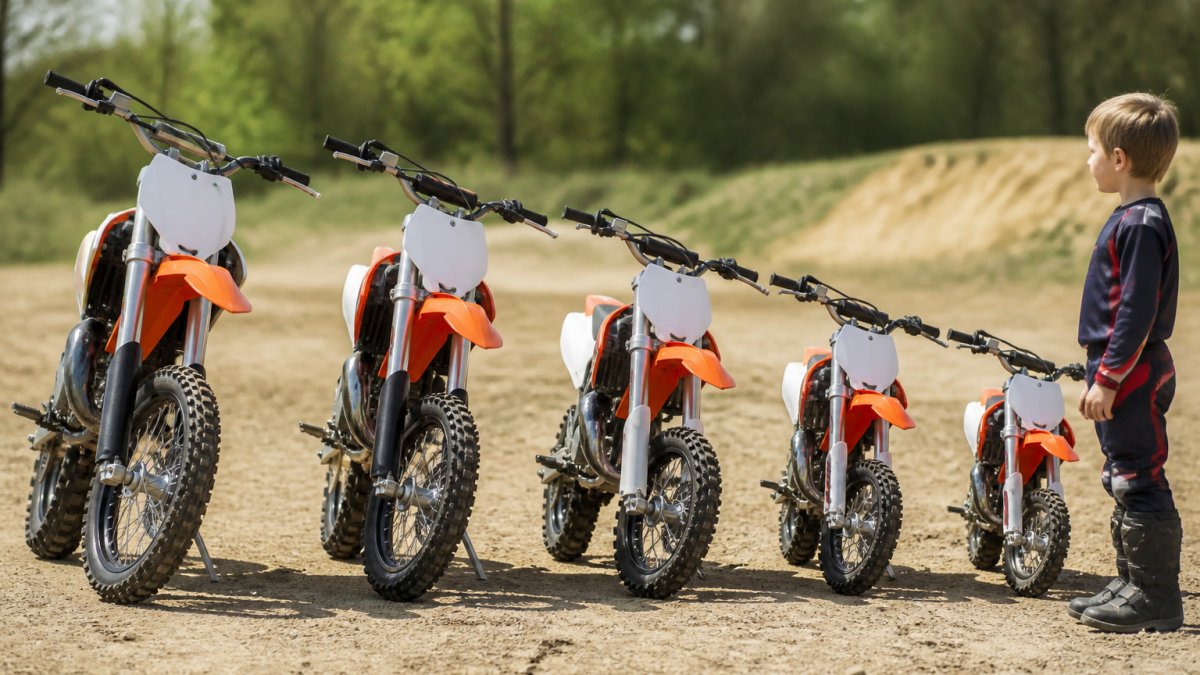
| Rider Height | Typical Engine Size | Typical Seat Height | Best For |
|---|---|---|---|
| Under 3 ft 6 in | 50cc automatic or electric | Low, about 22 to 24 in | Very young beginners |
| 3 ft 6 in to 4 ft | 50cc to 65cc | About 24 to 26 in | First-time riders |
| 4 ft to 4 ft 6 in | 65cc to 85cc | About 26 to 28 in | Building skills |
| 4 ft 6 in to 5 ft | 85cc to 110cc | About 28 to 30 in | Experienced kids |
| Over 5 ft | 125cc and up | Adult sizing | Teens and small adults |
Treat these numbers as approximate. Manufacturers publish their own size charts, and seat heights vary by model, so always check the specific bike's spec sheet before you buy.
Height alone can mislead.
Dirt Bike Size Chart for Kids by Age
Age gives parents a quick first filter, but it is the least precise measure.
Younger children usually start on a 50cc bike or an electric model with a throttle limiter. Middle years often move to 65cc to 85cc machines once they can handle clutch and braking control.
A practical way to use the age guide:
- Ages 4 to 6: Small-displacement or electric bikes with a low seat and adjustable power
- Ages 7 to 9: 50cc to 85cc bikes, as height and confidence allow
- Ages 10 to 13: 85cc to 125cc bikes for most riders
Experience matters as much as age. A confident seven-year-old with two seasons may be ready for a bigger bike than a first-time ten-year-old.
How to Measure a Child for a Dirt Bike
Measuring a child is quick and gives you numbers to compare against a manufacturer's chart. Do it before shopping so you know the target range.
Stand the child against a wall in socks, heels touching the wall. Mark the top of their head and measure from the floor to the mark for height. Next, measure the inseam, the distance from the crotch to the floor along the inside of the leg.
Inseam and Standover Measurement Steps
- Have the child stand straight with feet about shoulder-width apart.
- Place a hardcover book between their legs, spine up, pressed firmly against the crotch.
- Measure from the top of the book's spine to the floor. That is the inseam.
- Compare the inseam to the bike's seat height. A good fit usually means the child can get both feet flat or nearly flat on the ground.
Standover height, the clearance between the rider's crotch and the top of the fuel tank, matters too. Check the manufacturer's standover spec when you compare bikes.
Limits of Inseam-Only Sizing
Inseam is useful, but it does not tell the whole story. Two children with the same inseam can weigh very different amounts, and weight affects how a bike handles, brakes, and accelerates. A heavier child on a light bike may find it twitchy; a lighter child on a heavy bike may struggle to lift and steer it.
Inseam also says nothing about experience or temperament. Use it as one input alongside weight, skill level, and the fit test below.
Running a Seat-on-Bike Fit Test
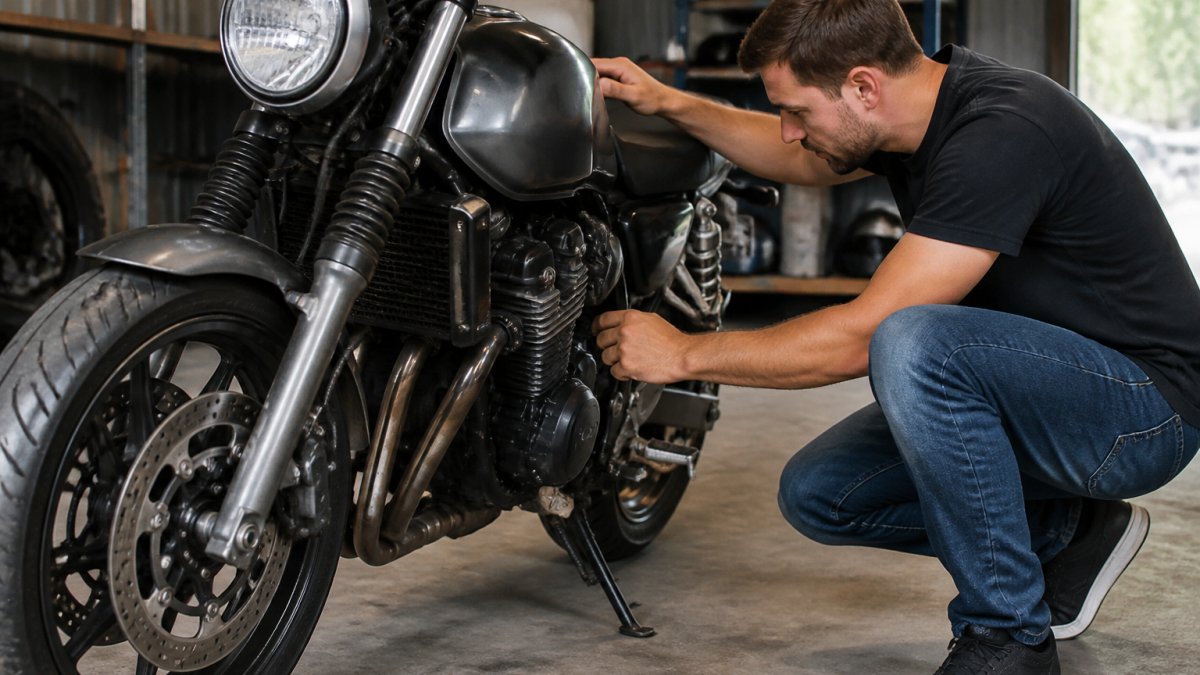
The fit test is where a size chart becomes real. A chart tells you where a child lands on average; the fit test tells you whether this child can actually control this bike.
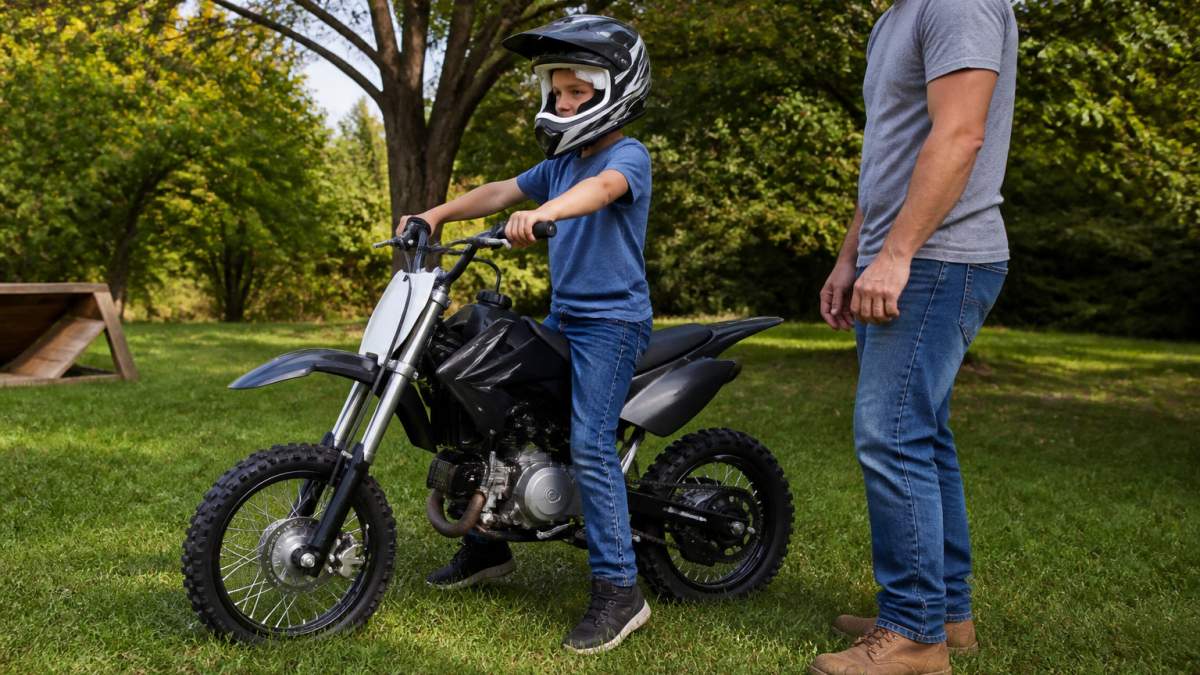
Set the bike on flat, firm ground with the engine off and the key out. Have the child wear the boots and helmet they will ride in, because thick soles and a helmet change reach and balance.
1. Ground reach while seated
Have the child sit on the seat with both hands on the grips and both feet on the pegs. Then have them slide forward and put their feet down.
- Both feet flat on the ground: the bike is on the small side for a growing rider, but it is the easiest to control and a fine starting point for a true beginner.
- Balls of both feet down, heels slightly raised: the common target for a first or second bike. The child can hold the bike up at a stop and dab a foot in a corner.
- One foot down, the other still on the peg: workable for an experienced rider on a taller bike, but a beginner will feel unstable at every stop.
A useful rule of thumb: a beginner should be able to get the balls of both feet down with knees slightly bent, not locked straight. Locked knees mean the seat is too high for confident stops.
2. Handlebar and lever reach
With the child seated and hands on the grips, check that they can cover the front brake lever and pull it fully to the grip without stretching or shifting back on the seat.
Also check handlebar height and width. The child should be able to stand on the pegs with a slight bend in the knees and reach the bars without hunching.
3. Control access with feet on the pegs
Have the child keep both feet on the pegs and operate the controls:
- Press the rear brake pedal through its full travel.
- Roll the throttle on and off smoothly (engine off).
- Shift through the gears on a manual bike, if the child is ready for one.
If the child has to lift a foot off the peg or slide off the seat to reach the brake pedal, the bike does not fit. Pedal height and lever position are adjustable on many models, so try adjusting before you rule a bike out.
4. Weight and balance check
A child should be able to hold the bike upright between their legs and, ideally, pick it up from a tip-over.
A practical benchmark: if the child cannot right the bike from its side on flat ground with proper lift technique, the bike is likely too heavy for their current strength, regardless of seat height.
5. The static balance and comfort check
Have the child rock the bike side to side while seated, then stand on the pegs and shift their weight forward and back. They should look relaxed, not stiff or braced. Watch for white knuckles, a rigid posture, or repeated glances at the ground. Hesitation signals the bike feels big, and a nervous rider learns more slowly than one on a slightly smaller bike.
A simple pass/fail decision
Use this order to make the call:
- Can the child get the balls of both feet down with knees slightly bent? If no, the bike is too tall.
- Can the child reach and fully operate both brakes and the throttle from the normal riding position? If no, adjust the controls; if they still cannot, the bike is too big.
- Can the child hold the bike up and right it from a tip-over? If no, the bike is too heavy.
- Does the child look relaxed on it? If no, size down.
A fit test takes about ten minutes and often settles the decision faster than any chart. Do it on the exact model you are considering, because seat height, bar bend, and lever position vary between models.
Is a 50cc Dirt Bike Right for Your Child?
A 50cc dirt bike is the most common first bike for younger riders.
A 50cc bike is a good fit when:
- The child is young, usually under about 7, or is a first-time rider
- The child's height and inseam fall at the low end of the size chart
- The child can reach the ground comfortably while seated
Consider a larger bike when the child has outgrown the 50cc in height or weight, has several seasons of experience, and handles the current bike with ease.
Check power and speed specs carefully, since electric bikes are rated differently from gas engines.
Engine Size, Weight, and Electric Models
Engine size, weight, and power delivery work together, and a cc number alone tells you little about whether a child can manage a bike. A 110cc trail bike with a smooth power curve can be easier for a beginner than a peaky 85cc two-stroke. Look at all three factors, plus how the power arrives.
Why cc is only a starting point
Displacement describes engine volume, not output or manners. Two bikes with the same cc can differ in horsepower, gearing, weight, and throttle response. Use the cc ranges in the height chart to narrow the field, then compare the actual model specs:
- Seat height (the number that most affects fit)
- Curb weight (the number that most affects whether the child can handle a tip-over)
- Power delivery (smooth and linear versus abrupt and peaky)
Weight: the spec parents overlook
Weight affects handling more than most parents expect. A lighter bike is easier to lift after a tip-over, steer in tight turns, and stop.
As a general guide, a beginner should be able to right the bike from its side using proper lifting technique. If they cannot, the bike is too heavy for now, even if the seat height fits.
Power delivery and throttle response
How power arrives matters as much as how much there is. Some youth bikes deliver power in a smooth, predictable build that lets a new rider learn throttle control. Others hit harder at a certain rpm, which can surprise a child mid-corner.
A throttle limiter or adjustable throttle stop lets you reduce how far the throttle opens, softening response for early rides.
Electric dirt bikes: sizing without cc
Electric models do not translate neatly to cc charts, because electric motors deliver torque from a standstill. A low-power electric bike can feel quicker off the line than its rating suggests, and a higher-power one can be tuned down with speed modes. Compare electric models on these specs instead of cc:
- Seat height (same fit rules apply)
- Weight (electric bikes can be heavier than expected because of the battery)
- Rated motor power (watts, not cc)
Matching power to experience
A first-time rider does better on a bike with modest power and a smooth throttle, even if they fit a larger one. An experienced child who has handled a smaller bike well can step up to more power, but the jump should be gradual: move up one size class at a time, ride the new bike in a reduced-power setting if it has one, and only open it up once the child is comfortable with the weight and controls.
Judge a bike by seat height, weight, brake and lever reach, and how smoothly power arrives, not by cc alone. For electric models, compare watts, top speed, speed modes, and weight, and start in the lowest mode.
Booking a Fit Check at Flemington Powersports
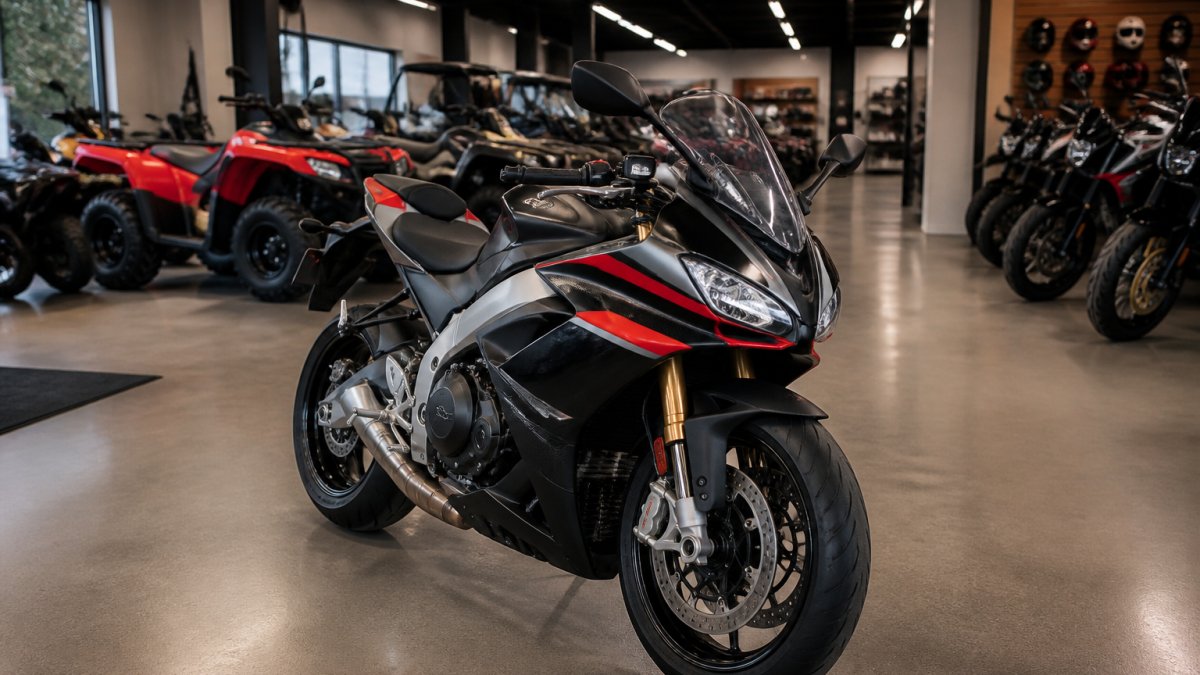
Reading a size chart is a good start, but nothing replaces sitting a child on the actual bike. Visit Flemington Powersports to discuss your child's fit. Call or text 908-237-0099, or visit us at 300 Route 202 in Flemington, NJ. We are open Tuesday through Saturday. Visit FlemingtonPowersports.com for current inventory and to request a quote.
Frequently Asked Questions
What age is a 50cc dirt bike for?
A 50cc dirt bike is generally sized for riders roughly 5 to 10 years old, but age alone is not reliable. Manufacturer size charts list height and seat-height ranges for each model, and those matter more than the birthday on the calendar. A child who is small for their age may fit a 50cc bike well at 9, while a taller 7-year-old may already need more room. Always check the rider's height and whether both feet reach the ground with knees slightly bent before buying.
Is a 50cc dirt bike too small for a 10-year-old?
It depends on the child's height, weight, and experience. Many 10-year-olds who are under about 4 feet 6 inches tall fit comfortably on a 50cc model, and it is a common starting point for beginners. A taller or heavier 10-year-old with some riding experience may outgrow it quickly and feel cramped or underpowered. Check the manufacturer's height range and perform a seat-on-bike fit test before deciding.
How do I choose the right dirt bike size for my child?
Start with the rider's height and inseam, then compare those numbers to the manufacturer's size chart for each model. Confirm the child can sit on the seat with both feet flat or nearly flat and can reach the handlebars and controls without stretching. Consider the child's experience and weight, since a beginner usually does better on a smaller, lower-power bike. When the child falls between two sizes, the smaller bike is usually the safer choice for learning control.
How tall should a child be for a 50cc dirt bike?
Most 50cc youth models suit riders from about 3 feet 6 inches to roughly 4 feet 6 inches, though the exact range varies by manufacturer. The best check is whether the child can sit on the bike with feet reaching the ground and knees slightly bent. Measure the inseam as described in the sizing section and compare it to the specific model's seat height. If you are unsure, bring your child in for a fit check before purchasing.