 listicle
What Beginners Need to Know About Choosing a Scooter
Last Updated: October 26, 2026
Quick Summary
The best scooter for beginners combines reliable engineering with beginner-friendly controls that build speed gradually, letting you develop throttle control safely. Prioritize stability, responsive braking, and a motor power range of 250-500W over top speed or advanced features.
- Vespa and Piaggio scooters from Flemington Powersports offer proven reliability and straightforward controls for new riders.
- A wider deck (5-6 inches) and larger wheels (8+ inches) provide better stability while learning.
- Buy a scooter with 15-25 miles of range to cover commutes safely without stressing the battery.
- Wear a reflective vest under $20 to increase visibility to drivers.
- Practice emergency stops from 10 mph to develop the skills you need for unexpected obstacles.
Table of Contents
- Understanding Scooter Types: Electric vs Gas for First-Time Riders
- Best Electric Scooter for Beginners
- Key Features That Matter When You're Learning to Ride
- Electric Scooter Speed and Range Expectations
- Beginner Scooter Buying Guide: What to Prioritize
- Scooter Safety Gear for Beginners
- Getting Your First Scooter Ready to Ride
- Frequently Asked Questions
Understanding Scooter Types: Electric vs Gas for First-Time Riders
Your first decision isn't which model to buy, it's what type of scooter makes sense for you, and finding the best scooter for beginners starts with this choice. Electric and gas-powered scooters serve different riders, and getting this wrong upfront wastes time and money.
Your choice shapes which features matter, what price range to expect, and how much time you'll spend maintaining your ride.
Best Electric Scooter for Beginners
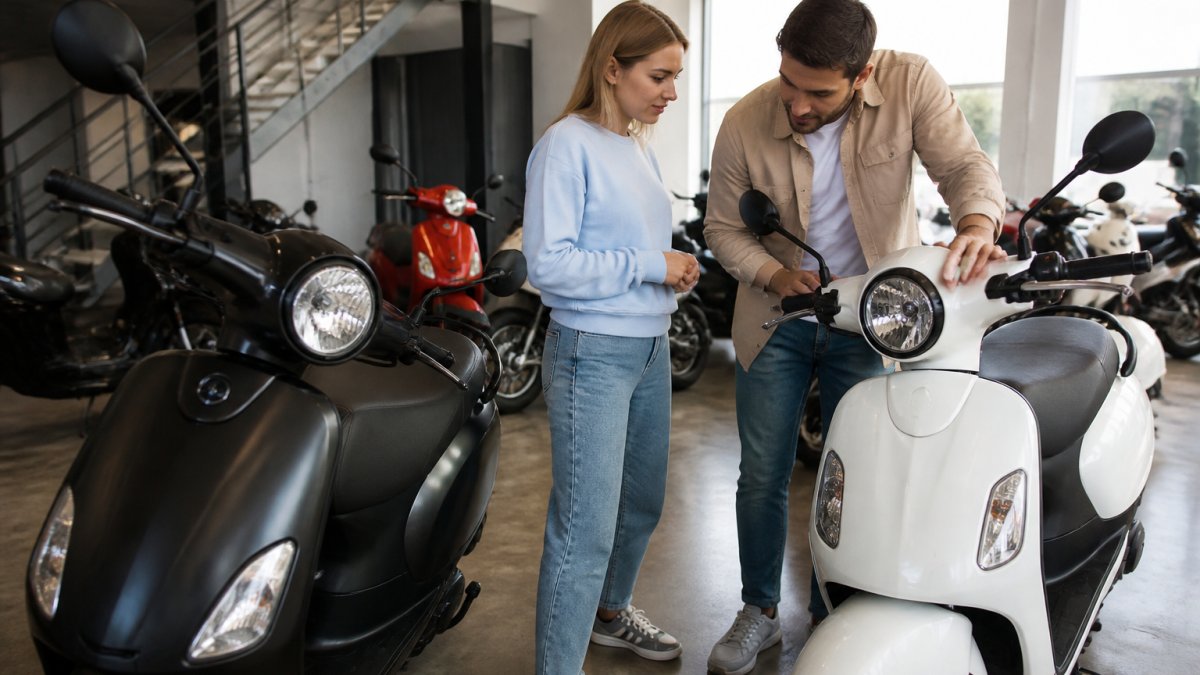
Vespa and Piaggio scooters, available at Flemington Powersports, combine classic design with beginner-friendly engineering. These Italian-made models offer proven reliability and straightforward controls that don't overwhelm new riders.
Key Features That Matter When You're Learning to Ride
Not every feature matters equally when you're learning. Some are essential; others drain your budget without changing your riding experience.
Motor Power and Acceleration
Acceleration you can't control is dangerous. A beginner needs a scooter that builds speed gradually, letting you develop a feel for throttle response. Overpowered scooters teach bad habits, riders learn to jab the throttle instead of rolling it smoothly.
Weight and Portability
Folding mechanisms vary. Some fold with one hand. Others require two steps or tools. Test the folding action yourself, what feels simple in a video often feels awkward in practice. A broken folding hinge is an expensive repair.
Braking and Stability
Stability depends on deck width, wheelbase, and tire grip. A wider deck (5-6 inches) feels more stable than a narrow one. Larger wheels (8+ inches) roll over obstacles more smoothly. Pneumatic (air-filled) tires grip better than solid tires but need occasional inflation.
Electric Scooter Speed and Range Expectations
For beginners, buy a scooter with more range than you think you need. If your commute is 10 miles each way, a scooter rated for 20-25 miles gives you a safety margin. Pushing maximum range every ride drains the battery faster and stresses the motor.
Beginner Scooter Buying Guide: What to Prioritize
| Factor | Priority Level | Why It Matters |
|---|---|---|
| Reliability | Critical | A broken scooter halts your learning |
| Control & Throttle Response | Critical | Safe learning depends on predictable power |
| Braking System | Critical | Responsive brakes prevent accidents |
| Weight | High | Portability determines actual usage |
| Motor Power (250-500W) | High | Adequate for commuting without overwhelming control |
| Range (15-25 miles) | High | Covers most commutes with safety margin |
| Top Speed | Medium | Less important than control for beginners |
| App Features | Low | Nice-to-have, not essential for learning |
Total Cost of Ownership: What Beginners Actually Spend
The purchase price is only the first check you write.
Fit and Accessibility: Will This Scooter Actually Fit You?
Try before you buy when possible. A five-minute test ride in a shop parking lot reveals more about fit than any spec sheet.
Scooter Safety Gear for Beginners
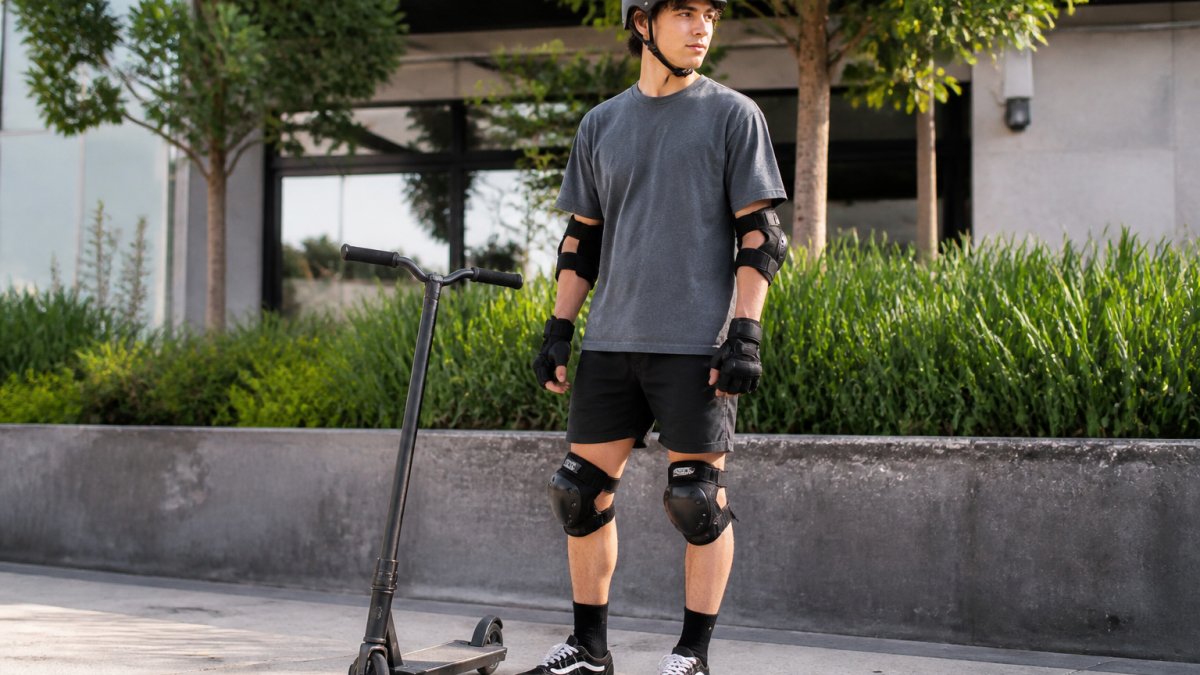
Wear bright or reflective clothing, especially at dawn, dusk, or night. Drivers miss scooters more often than cars, and visibility reduces that risk. A reflective vest costs under $20 and packs away easily.
First-Ride Drills for New Riders
- Emergency stop. From 10 mph, practice stopping quickly without locking the wheels. This is the skill you'll rely on when a car pulls out unexpectedly.
Getting Your First Scooter Ready to Ride
Getting started on a scooter doesn't require expensive gear or advanced skills. It requires the right scooter, one built for learning, not for showing off. Get a quote to explore beginner scooters that fit your needs and budget.
Frequently Asked Questions
What should a beginner look for in a scooter?
Beginners should prioritize stability, ease of control, and appropriate motor power. Look for a scooter with a wide deck for balance, responsive but not aggressive throttle control, and reliable braking. Weight matters too, a lighter scooter is easier to handle and transport. Battery life should support your typical commute without requiring constant charging. Start with models designed specifically for new riders rather than performance-focused options.
Is an electric scooter or a gas scooter better for beginners?
Electric scooters are generally better for beginners because they offer smoother acceleration, easier throttle control, and simpler operation with fewer mechanical components to maintain. Gas-powered scooters require more rider skill to manage engine power and shifting. Electric scooters also provide instant torque feedback, making it easier to learn throttle modulation. Gas scooters may offer longer range, but electric models suit the learning curve better.
What safety gear should a beginner scooter rider wear?
Every ride requires a helmet that meets safety standards. Add knee pads and elbow pads to protect joints in falls. Wrist guards reduce hand injuries, and gloves improve grip and protect skin. Wear closed-toe shoes with good ankle support and visibility clothing, especially in low light. This gear significantly reduces injury severity. Many beginners skip protection on short trips, that's when most accidents happen. Invest in quality gear before your first ride.
How fast can electric scooters go?
Beginner-friendly electric scooters typically reach 15-25 mph, which is safe for learning urban riding and traffic navigation. Some models go faster, but speed isn't the priority when starting out. Real-world speed depends on rider weight, terrain, battery charge level, and motor power. Cruising speed is usually lower than top speed. Focus on control and comfort at moderate speeds rather than maximum velocity. Faster scooters suit experienced riders who've mastered braking and handling.