 listicle
Best Side-by-Side for Families: 2026 Guide
Table of Contents
- What Makes the Best Side-by-Side for Families
- Best 4-Seat Side-by-Side Models for Smaller Families
- Best 6-Seat Side-by-Side Models for Larger Groups
- Side-by-Side Safety Features Every Family Should Know
- Reliable Side-by-Side Brands Built to Last
- Choosing by Family Size, Ages, and Use Case
- Conclusion: Your Family's Next Adventure Starts Here
- Frequently Asked Questions
Last Updated: October 19, 2026
What Makes the Best Side-by-Side for Families
Finding the best side by side for families combines passenger capacity, safety features, and ride comfort to match your group size and use case. A family of four has different needs than a family of six, and trail riders need something different than campers.
Finding the right side-by-side UTV for families is a common goal. The choice comes down to three factors: how many people you need to carry, what terrain you'll encounter, and how much comfort matters on longer rides.
Most families choose based on engine power alone. That's backwards. A smaller, well-designed side-by-side with proper seating and safety features serves a family better than a more powerful machine that leaves passengers uncomfortable or exposed.
Best 4-Seat Side-by-Side Models for Smaller Families
A 4-seat configuration works well for families of four or smaller groups that value maneuverability and fuel efficiency.
Below are the 4-seat models most often recommended for family use, with the specs that actually matter.
Polaris General 4 1000, Seating for four with a rear bench, 13.2 inches of ground clearance, roughly 13 inches of front and 14 inches of rear suspension travel, and a cargo bed rated around 600 lb.
Polaris RZR XP 4 1000, The sport-focused 4-seater: more suspension travel (around 20 inches front and rear on some trims), a wider stance, and higher speed capability.
Can-Am Maverick Sport MAX DPS 1000R, Four seats, roughly 12 inches of ground clearance, and about 14 inches of front and 14 inches of rear travel.
Can-Am Defender MAX HD9, The utility-first 4-seater: lower top speed, a larger cargo bed (roughly 1,000 lb capacity on some configurations), and a quieter, relaxed ride. The pick for families whose side-by-side doubles as a property and hunting vehicle.
Honda Pioneer 1000-5, Seats five when the rear bed is converted to seats, or three with a full bed. The convertible rear seating is genuinely useful for families who sometimes need cargo and sometimes need seats.
Yamaha Wolverine X4 850, Four seats, a compact footprint, and Yamaha's well-regarded reliability. It is narrower than most 4-seat sport machines, which helps on tight trails, and the rear seats are among the more comfortable in the class for shorter riders.
Kawasaki Teryx4 S LE, Four seats, a relatively narrow width, and a torquey V-twin. The Teryx4 is an older design but remains a common family choice because it is simple, durable, and easy to service.
When comparing these, check three numbers against your actual use: width (a 64-inch machine fits trails a 72-inch machine will not), ground clearance (10 inches is a practical minimum for rocky trails), and payload (passengers plus gear should stay well under the rating).
Best 6-Seat Side-by-Side Models for Larger Groups
Six-seat side-by-sides work best for larger families or groups that frequently ride together. Modern 6-seat models handle trails nearly as well as 4-seat versions while offering genuine utility for bigger groups.
Here are the 6-seat models most often recommended for family use, with the family-relevant specs and a realistic ownership-cost view.
Polaris Ranger Crew XP 1000, Seats six, with a cargo bed rated around 1,000 lb and a towing capacity around 2,500 lb. This is a default family-and-property 6-seater: comfortable, quiet, and capable of hauling gear for a multi-day trip.
Polaris General 6 1000, Seats six with a sportier suspension tune than the Ranger Crew and a smaller bed. It is a pick for families who mostly ride trails and only occasionally haul.
Can-Am Defender MAX HD10, Seats six, with a bed rated around 1,000 lb and a towing capacity around 2,500 lb.
Can-Am Maverick Sport MAX DPS 1000R, Four seats rather than six, but families often cross-shop it against 6-seaters; if you only occasionally carry six, a 4-seater with a trailer is often cheaper overall.
Honda Pioneer 1000-6 Deluxe Crew, Seats six with a full-size bed, which is unusual in this class. Honda's dual-clutch transmission and reputation for durability make it a strong long-term family buy.
Yamaha Wolverine RMAX4 1000, Seats four, but the RMAX4 is frequently compared with 6-seaters for its comfort and cargo flexibility; families who rarely need six seats often prefer it.
Kawasaki Mule Pro-FXT, Seats six in crew configuration or three with a full bed, thanks to a convertible rear section. It is slower and more utility-focused than the sport-crew models, but it is simple, durable, and inexpensive to maintain.
When evaluating 6-seat models, pay attention to rear seat comfort and legroom. Back-row riders experience more vibration and less suspension isolation, so padding and support become critical on rides longer than a few hours.
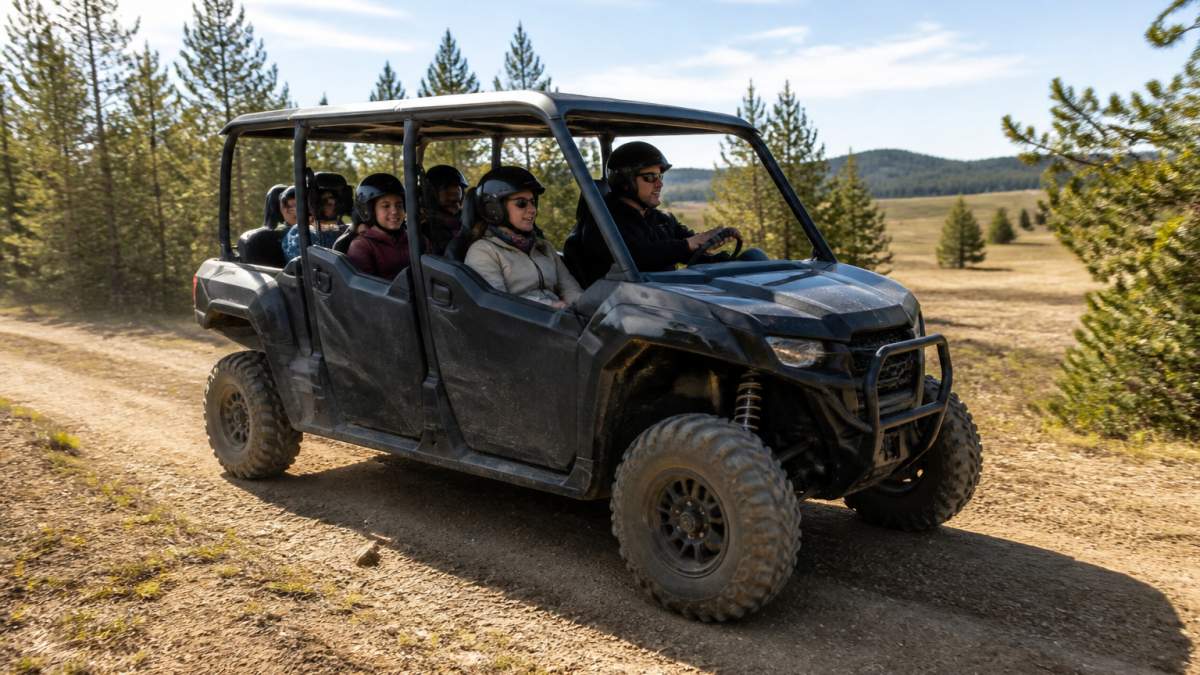
Side-by-Side Safety Features Every Family Should Know
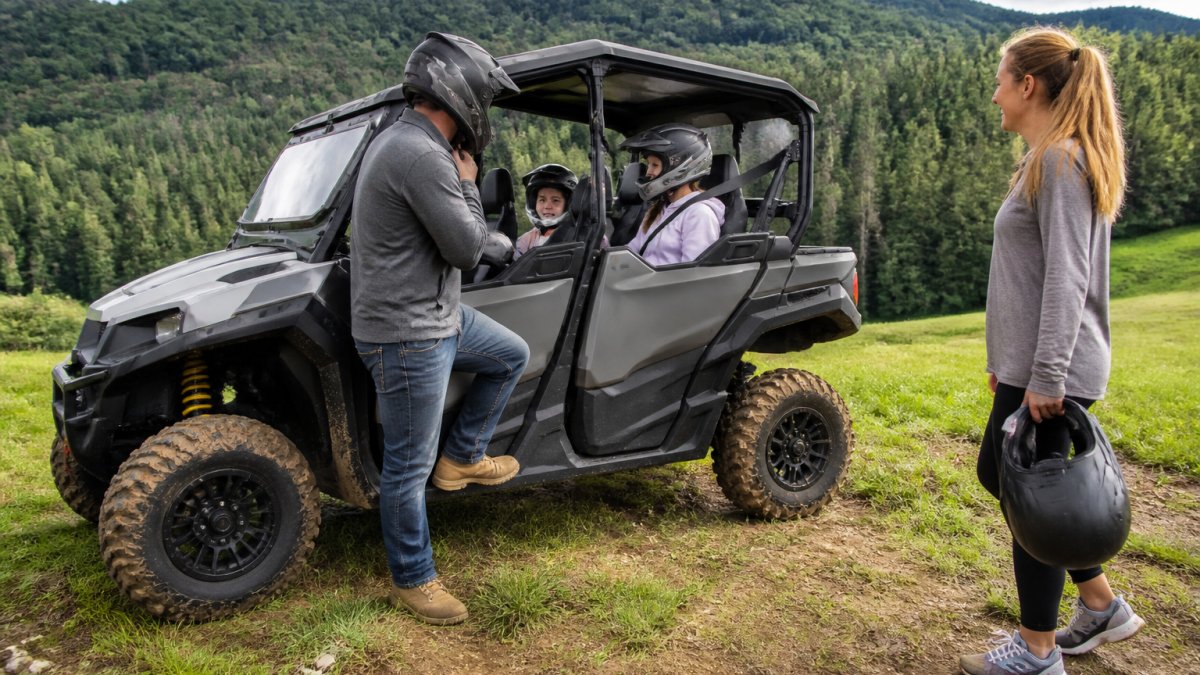
Safety features separate a good family side-by-side from a risky one. Rollover protection structure (ROPS) is non-negotiable, the metal framework that protects passengers if the vehicle tips. A properly engineered ROPS keeps occupants inside during a rollover and prevents crush injuries.
Seat belts deserve more attention than most buyers give them. A 3-point harness works better than a lap belt because it distributes impact force across the chest and shoulders rather than the abdomen. For younger passengers, check that seat belt anchoring points are positioned correctly for their size.
Windshield and roof coverage protect passengers from debris and weather and reduce the chance of ejection on rough terrain. A full-length roof with side netting is better than a partial windshield, especially on rocky or brush-heavy trails.
Stability control systems help prevent rollovers on uneven terrain. Modern side-by-sides use electronic stability control to manage weight distribution and traction, reducing tipping on side slopes or during hard cornering, especially valuable for families with less riding experience.
Lighting and visibility are often overlooked. LED headlights and brake lights help you see obstacles and let other riders see you on group rides. On longer trips that might extend into dusk, good lighting prevents accidents that happen when visibility drops.
Reliable Side-by-Side Brands Built to Last
Brand reliability matters because a breakdown far from help ruins a trip and puts your family at risk. Polaris and Can-Am are known for durability and parts availability. Both invest heavily in engineering and quality control, and both have extensive dealer networks for service.
Polaris machines tend toward straightforward engineering with proven components. Their engines are strong and their suspension handles rough terrain without excessive maintenance. Resale value stays strong if you upgrade later.
Can-Am focuses on innovation and feature integration, often including electronic power steering and advanced suspension tuning. They've built a reputation for combining power with reliability, though they sometimes cost more upfront.
When comparing brands, check warranty coverage and dealer proximity. A strong warranty is less risky than minimal coverage, even at a higher upfront price. A nearby dealer matters more than you'd expect, quick parts and professional service prevent small problems from becoming expensive ones.
Flemington Powersports carries both new and pre-owned models from these proven manufacturers. Our team can help you evaluate specific models based on your family's size, riding experience, and terrain preferences.
Avoid unfamiliar brands or models with limited dealer support, even if they cost significantly less. A cheaper side-by-side that breaks down in the field becomes an expensive rescue situation and a ruined family outing.
Choosing by Family Size, Ages, and Use Case
Family size is the starting point. A family of four with teenagers has different needs than a family of four with young children. A family of six planning weekend trail rides needs something different than a family of six doing extended overlanding trips.
For families with children under 10, a 4-seat model often works better because it's easier to secure younger passengers safely and keep them visible. Smaller children need proper seat positioning and harness fit, which is easier in a compact cabin. Younger kids also tolerate less vibration and noise, so a smaller machine with better suspension isolation helps.
Families with teenagers and adults can handle 6-seat models more easily because older passengers manage the ride better and can help younger ones stay secure. The extra seating capacity becomes genuinely useful for extended family rides or trips with friends.
Use case matters as much as family size. Casual trail riding on maintained paths requires less capability than technical rock crawling or deep backcountry travel. Day riders on established trails can choose based on comfort and seating; multi-day campers need cargo capacity, reliability, and durability for repeated rough terrain.
Budget matters too. New side-by-sides cost more than pre-owned, but newer machines have better warranty coverage and the latest safety technology. Pre-owned models from reputable dealers offer good value if the maintenance history is clear. Flemington Powersports offers both, so you can choose based on your actual budget rather than stretching for new when pre-owned makes more sense.
Conclusion: Your Family's Next Adventure Starts Here
Finding the best side by side for families means matching machine to actual use. A 4-seat crew cab works for smaller families and tight trails; a 6-seat model handles larger groups and extended trips. Either way, prioritize safety features, proven reliability, and maintenance support over raw power or trendy features.
Flemington Powersports has the selection, expertise, and service support to help your family find the right side-by-side UTV. Whether you're looking for a new machine with full warranty coverage or a quality pre-owned option, our team can walk you through the options and help you choose based on your family's specific needs. Visit us at 300 Route 202 in Flemington, New Jersey, or call 908-237-0099 to discuss which model makes sense for your next adventure. We also offer financing options and trade-in valuations to make the purchase easier for your family.
Frequently Asked Questions
What is the most reliable side-by-side brand for families?
Polaris and Can-Am are among the most proven reliable side-by-side brands, known for durability, strong dealer support, and consistent performance across recreational and work-and-play models. Both offer crew cab and multi-seat configurations designed for family use. Reliability depends on regular maintenance, proper break-in, and choosing a model suited to your intended use, trail riding, camping, or overlanding. Ask your dealer about warranty coverage and local service availability before purchasing.
Should a family choose a 4-seat or 6-seat side-by-side?
A 4-seat side-by-side suits families of four or smaller groups who prioritize nimble handling and easier transport. A 6-seat model accommodates larger families or groups, offers more cargo capacity, and works better for extended camping or overlanding trips. Consider your typical passenger count, vehicle storage space, and whether you'll tow the UTV frequently. Four-seaters are generally lighter and more fuel-efficient; six-seaters provide comfort and versatility for bigger adventures.
What safety features should families look for in a side-by-side?
Key safety features include rollover protection structures (ROPS), multi-point seat belts, a sturdy roll cage, and a wide wheelbase for stability. Check for enclosed cabs with windshields if you ride in varied weather, responsive steering and suspension for trail control, and ground clearance suited to your terrain. Ensure all passengers have proper helmets and safety gear. Test ride models to evaluate handling and visibility before committing to purchase.
What is the best side-by-side for a family of five?
A 6-seat side-by-side is the practical choice for a family of five, providing seating for all passengers plus additional cargo space for gear, camping supplies, or recreational equipment. Look for crew cab models with comfortable ride quality, reliable suspension, and good ground clearance. Brands like Polaris and Can-Am offer proven 6-seater options with strong all-around performance for trail riding, camping, and overlanding. Visit a dealer to test the seating comfort and layout for your family's specific needs.