 listicle
Best Dirt Bike for Beginners: A 2026 Guide
Table of Contents
- What Makes a Dirt Bike Beginner-Friendly
- Beginner Dirt Bike Size Chart: Finding Your Fit
- Best Beginner Dirt Bike for Adults
- Two-Stroke vs Four-Stroke Dirt Bike for Beginners
- New vs Used: Total Ownership Cost for Beginners
- Used Dirt Bike Buying Checklist
- Safety Gear and First-Ride Preparation
- Frequently Asked Questions
Last Updated: October 21, 2026
What Makes a Dirt Bike Beginner-Friendly
Finding the best dirt bike for beginners comes down to three core factors: manageable power delivery, predictable handling, and a seat height that matches your inseam. A beginner-friendly dirt bike isn't about the flashiest model or the newest technology, it's about matching machine capability to rider skill level so you can focus on learning fundamentals instead of fighting the bike.
The most common mistake new riders make is choosing based on brand reputation or style rather than engine displacement and power characteristics. A 450cc motocross machine might be the brand's flagship, but it'll overwhelm most adult beginners. The goal is a bike that forgives mistakes, responds predictably to throttle input, and lets you build confidence through repetition.
Our team understands that the right beginner bike accelerates your learning curve, literally. You progress faster when the machine isn't fighting you.
Here's what separates a beginner-appropriate dirt bike from one that's too aggressive: throttle response should be linear and controllable, power delivery should feel natural rather than explosive, and the bike should reward smooth technique instead of punishing hesitation.
Beginner Dirt Bike Size Chart: Finding Your Fit
Engine Displacement and Rider Experience
Engine displacement is the single most important specification for beginner selection. Measured in cubic centimeters (cc), displacement directly correlates to power output and how forgiving the bike feels in your hands.
For adult beginners with no prior riding experience, 125cc four-stroke engines are the industry standard starting point. These bikes produce enough torque to handle real terrain, not just flat practice grounds, while keeping power delivery manageable. A 125cc four-stroke won't wheelie unexpectedly or surge forward when you accidentally twist the throttle too hard.
If you're a smaller-framed adult or returning to riding after years away, 110cc or 100cc models work well. They're lighter and less intimidating while still offering genuine off-road capability. Conversely, if you're a larger adult or have experience on other vehicles, a 150cc or 230cc four-stroke gives you more headroom without crossing into aggressive power delivery.
Two-stroke 125cc bikes exist and cost less upfront, but they demand more precise throttle control and require active clutch management. We'll cover the two-stroke versus four-stroke decision in detail below, but for pure beginner-friendliness, four-stroke is the easier path.
Seat Height and Inseam Matching
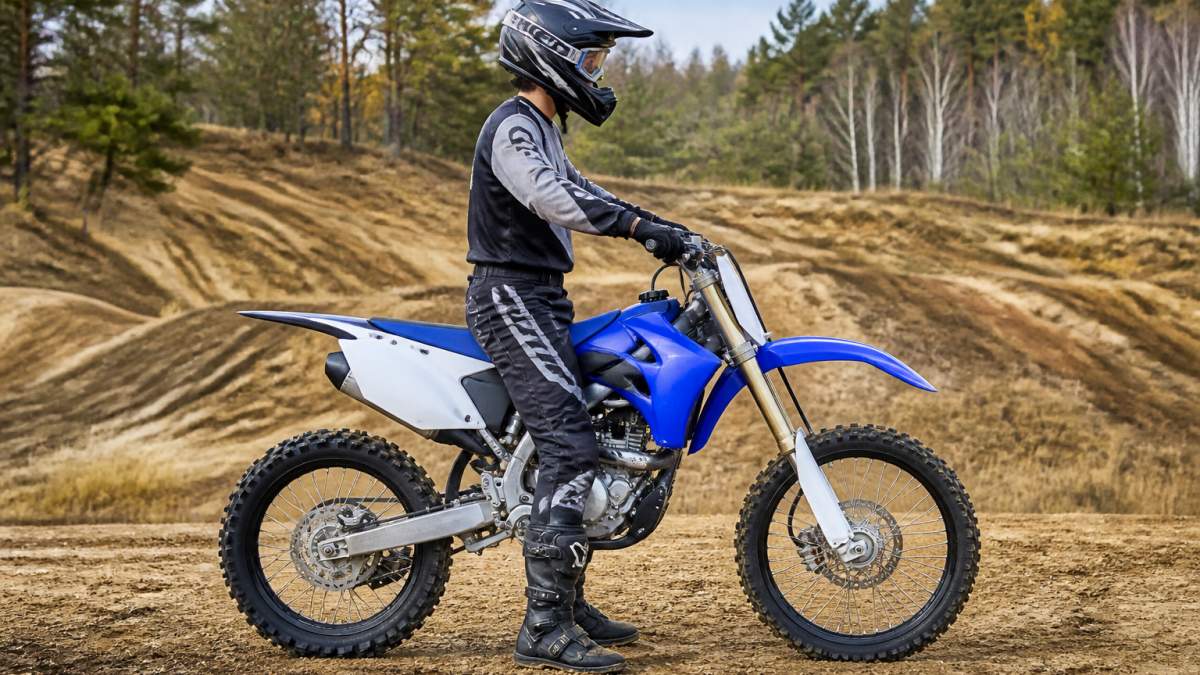
Seat height determines whether you can touch the ground at stops, and that single factor influences confidence more than any other specification. If both feet don't reach the ground when sitting on the seat, you'll struggle with balance at stops and feel unstable in tight situations.
A general rule: your inseam should be at least 1-2 inches shorter than the bike's seat height measurement. This gives you a couple inches of ground clearance when seated.
Here's how to measure properly: wear the boots you'll ride in, stand barefoot against a wall, and have someone measure from your crotch to the floor. That's your inseam. Then compare it to the bike's seat height specification.
Many beginner-friendly models come with adjustable seat heights or lower-profile seats available. A 125cc four-stroke typically has a seat height between 26-30 inches, which accommodates most adult riders.
Best Beginner Dirt Bike for Adults
Adult beginners have different needs than teenage riders. You likely have more upper body strength but potentially less flexibility. You're probably investing your own money, so you want reliability and resale value.
The best beginner dirt bike for adults balances power with forgiveness.
Four-stroke engines dominate the adult beginner market because they're more intuitive. You twist the throttle, the bike responds proportionally, and the power delivery stays consistent. There's no need to manage a clutch aggressively or anticipate engine behavior the way two-stroke engines demand.
Weight matters for adults too. A heavier bike (around 250-280 pounds) feels more stable on rough terrain but requires more physical effort to move around when stopped or walking it.
Reliability is non-negotiable when you're buying with your own money. Established brands with strong dealer networks mean parts availability and service support. Flemington Powersports carries models from manufacturers with solid track records.
Two-Stroke vs Four-Stroke Dirt Bike for Beginners
Power Delivery and Throttle Control
The difference between two-stroke and four-stroke engines determines how the bike responds to your input, and this is where most beginners struggle with two-strokes.
A four-stroke engine fires once every two crankshaft rotations. Power delivery is linear and predictable. You can modulate throttle smoothly and the bike responds proportionally. This is why four-strokes dominate beginner recommendations.
A two-stroke engine fires once per crankshaft rotation, creating more frequent power pulses. The engine produces peak power in a narrow RPM range, then drops off sharply. This creates a characteristic "hit" where the power suddenly arrives and then fades.
Two-strokes also require active clutch management to control power delivery at low speeds. In tight terrain or slow technical sections, you're working the clutch constantly while a four-stroke rider is simply rolling the throttle.
Two-strokes are lighter (sometimes 20-30 pounds lighter than equivalent four-strokes) and cost less upfront. If budget is the absolute constraint, a 125cc two-stroke is rideable. But if you can stretch to a 125cc four-stroke, the learning advantage is substantial.
Maintenance and Reliability
Four-stroke engines require regular oil changes and valve maintenance, but they're mechanically straightforward. You change oil, check air filters, and the bike keeps running.
Two-stroke engines demand more active maintenance. They require premix fuel (oil mixed into gasoline at precise ratios), more frequent spark plug changes, and regular top-end rebuilds. The clutch and transmission typically wear faster. For a beginner managing their first bike, this maintenance complexity is frustrating.
Two-strokes also run hotter and foul spark plugs more easily if you're not riding aggressively enough. A beginner practicing in a field at moderate speeds can experience fouled plugs and hard starting, which kills motivation fast.
For reliability and ease of ownership, four-stroke engines win decisively for beginners. You can focus on riding instead of troubleshooting.
New vs Used: Total Ownership Cost for Beginners
The new versus used decision isn't just about purchase price. You need to consider the total cost of ownership, purchase price, repairs, potential warranty, and resale value.
A new beginner dirt bike costs more upfront but comes with a manufacturer warranty covering defects for a set period. You know the service history because there is none. You can customize the bike to your preferences without inheriting someone else's modifications.
Used bikes cost less initially, but the savings evaporate quickly if the previous owner neglected maintenance. The real cost of a cheap used bike often exceeds the cost of a new one when you factor in repairs and time spent troubleshooting.
The sweet spot for many beginners is a used bike from a reputable dealer, like Flemington Powersports, where you have some assurance of condition.
If you're absolutely certain you'll stay in the sport, new makes sense because you'll ride for years. If you're testing the water, a quality used bike from a dealer with warranty backing is the smarter choice.
Used Dirt Bike Buying Checklist
Inspecting Frame and Suspension
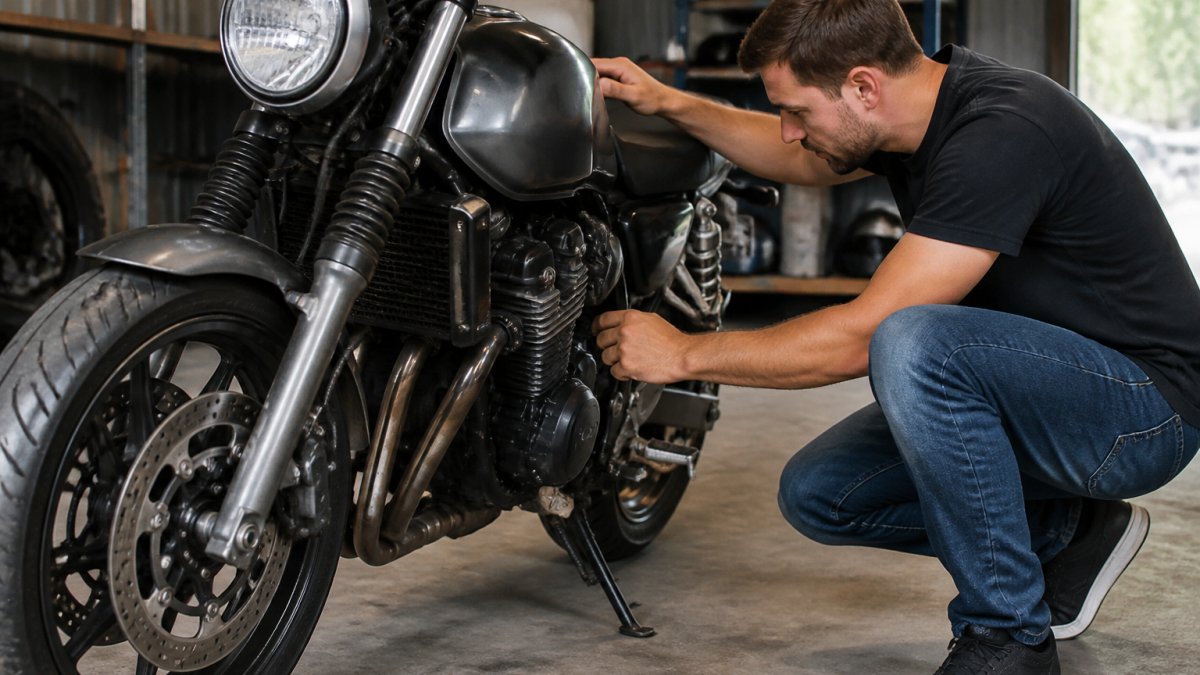
A bent frame is a dealbreaker. Examine the frame from multiple angles looking for kinks, cracks, or asymmetrical bends. Run your hand along the frame tubes. A bent frame affects handling unpredictably and is expensive to fix.
Check the suspension for leaks. Forks should be clean and dry. Shock bodies should show no oil seeping from seals. Suspension fluid leaks mean rebuilds or replacement, a significant expense.
Bounce the bike gently. The suspension should compress smoothly and rebound without clunking or grinding sounds. Clunking indicates worn bearings or damaged internals. Grinding suggests metal-on-metal contact inside the shock.
Look at the wheels for dents or cracks. A bent rim is cheaper to replace than a bent frame, but still adds to your total cost. Spin the wheels freely and listen for bearing noise or grinding.
Engine Condition and Starting Behavior
A cold start tells you a lot. The engine should fire within a few kicks without excessive force needed. Hard starting suggests spark plug fouling, carburetor issues, or compression loss, all expensive problems.
Once running, the engine should idle smoothly. Rough idling indicates carburetor problems or ignition issues. Excessive smoke from the exhaust suggests worn rings or piston damage. A little smoke on cold start is normal, but continuous heavy smoke is a red flag.
Listen for knocking or pinging from the engine. Detonation (engine knock) indicates carbon buildup or fuel issues, but can also signal internal damage. A healthy engine sounds crisp and clean.
Check the oil level and condition. Oil should be present and not milky (which indicates water contamination). Dark oil is normal, but if it smells burnt or looks gritty, the engine has been stressed.
Safety Gear and First-Ride Preparation
You cannot ride safely without proper gear. Dirt biking exposes you to crashes, flying debris, and impacts that street riding doesn't. The right gear isn't optional, it's the difference between a scraped knee and a broken arm.
Essential gear includes a helmet (DOT-certified, full-face for off-road), goggles, jersey, pants, boots, and gloves. A chest protector and knee guards add substantial protection for technical terrain.
Boots need to support your ankles and protect your shins from the bike's hot engine and sharp edges. Street motorcycle boots won't work, you need boots designed for off-road riding.
Before your first ride, spend time on the bike off the engine learning the controls. Squeeze the brakes. Operate the clutch if it's a manual. Find the kill switch. Get comfortable with the bike's weight and balance while stationary.
Start in an open area with no obstacles. A large field or empty lot is perfect. Practice starting, stopping, and basic throttle control before attempting terrain. Your first session should focus on machine familiarity, not distance or speed.
Choosing the best dirt bike for beginners is about matching the machine to your body size, experience level, and intended use. At Flemington Powersports, we help beginners find the right bike for their needs and provide the service support to keep it running. Visit our showroom or call 908-237-0099 to discuss beginner options and let our team match you with a bike that fits your size and budget.
Frequently Asked Questions
What size dirt bike is best for a beginner?
Engine displacement between 125cc and 250cc works for most beginner riders. A 125cc four-stroke is forgiving and builds confidence; a 250cc four-stroke offers more headroom as skills develop. Match seat height to your inseam, you should touch the ground with both feet when seated. Beginner dirt bikes prioritize manageable power delivery and stability over raw speed.
Should a beginner choose a two-stroke or four-stroke dirt bike?
Four-stroke engines are recommended for most beginners. They deliver power more gradually, making throttle control easier to learn. Two-stroke engines produce power instantly, which can overwhelm new riders. Four-strokes also require less frequent maintenance and fuel mixing, letting you focus on developing riding experience rather than bike upkeep.
What should I look for when buying a used dirt bike?
Inspect the frame for cracks, check suspension for leaks or damage, and examine the engine for rust or corrosion. Start the bike and listen for unusual noises, a clean start indicates good condition. Review maintenance history if available. Test the brakes, clutch, and throttle response. Take time evaluating used bikes; a well-maintained older model often outperforms a neglected newer one.
Is a 250cc dirt bike too big for a beginner?
A 250cc four-stroke can work for adult beginners with some riding experience or those with larger builds, but it demands more throttle discipline than smaller displacements. Younger or smaller beginners should start with 125cc to 150cc. The best beginner dirt bike matches your weight, height, and learning goals, 250cc offers headroom to grow into if you're ready for the responsibility.