 comparison
ATV vs UTV: Key Differences for Buyers
Last Updated: October 23, 2026
Quick Summary
An ATV vs UTV comparison shows that ATVs are lightweight, single or dual-rider vehicles with handlebar steering designed for agility on tight trails, while UTVs are larger side-by-side vehicles with steering wheels that seat two to six passengers and prioritize cargo capacity and work capability. ATVs typically weigh 300 to 600 pounds and cost $4,000 to $15,000, whereas UTVs weigh 1,000 to 2,000 pounds and cost $10,000 to over $30,000.
- ATVs weigh 300 to 600 pounds with one or two riders; UTVs weigh 1,000 to 2,000 pounds and seat two to six passengers.
- ATV payload capacity is 100 to 300 pounds; UTV cargo beds hold 500 to 1,500 pounds with towing capacity of 1,500 to 3,500 pounds.
- UTVs include seat belts and roll cages for passive safety; ATVs rely on rider gear and active balance control.
- New ATV prices start around $4,000; new UTVs start around $10,000 and commonly run $15,000 to $25,000.
- Choose an ATV for solo technical trail riding; choose a UTV for group recreation and serious work or utility tasks.
Table of Contents
- ATV vs UTV: Core Differences Explained
- Seating, Controls, and Riding Position
- ATV vs UTV Safety: What You Need to Know
- ATV vs UTV for Trail Riding Performance
- ATV vs UTV for Work and Utility Tasks
- ATV vs UTV Cost: Ownership and Maintenance
- Which Vehicle Is Right for You?
- Frequently Asked Questions
ATV vs UTV: Core Differences Explained
The choice between an ATV and UTV comes down to how you plan to ride and what you need the vehicle to do. An ATV vs UTV comparison reveals fundamental differences in design, capacity, and capability that affect everything from how you sit to what you can carry.
What an ATV Is
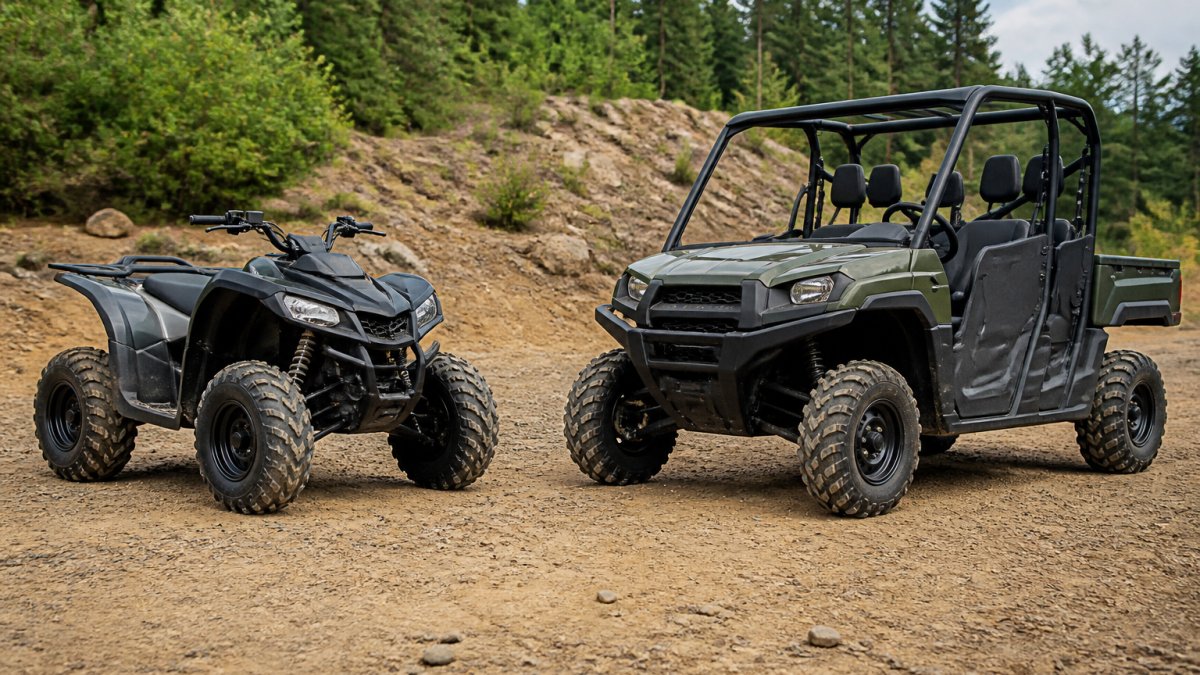
An ATV, or all-terrain vehicle, is a single-rider or dual-rider vehicle designed for off-road recreation and light utility work. The rider straddles a narrow seat, much like a motorcycle, and steers with handlebars. It is compact, lightweight, and built for agility on tight trails.
ATVs are also called quads or four-wheelers because of their four-wheel configuration. A typical ATV weighs between 300 and 600 pounds, making it nimble enough for solo riders to navigate challenging terrain with precision. The straddle seat keeps the rider centered over the chassis, which improves balance and control on uneven ground.
What a UTV (Side-by-Side) Is
A UTV, or utility task vehicle, seats two or more passengers side-by-side and uses a steering wheel instead of handlebars. It is larger, heavier, and designed for both recreation and serious work. UTVs are also called side-by-sides or SxS vehicles because of their seating arrangement.
The UTV platform prioritizes cargo capacity and passenger comfort. A typical UTV weighs 1,000 to 2,000 pounds and carries significantly more payload than an ATV. Many models offer an enclosed or semi-enclosed cab for weather protection, and the steering wheel feels familiar to anyone who has driven a truck or car. This vehicle excels at hauling equipment, towing trailers, and transporting multiple people across property.
Seating, Controls, and Riding Position
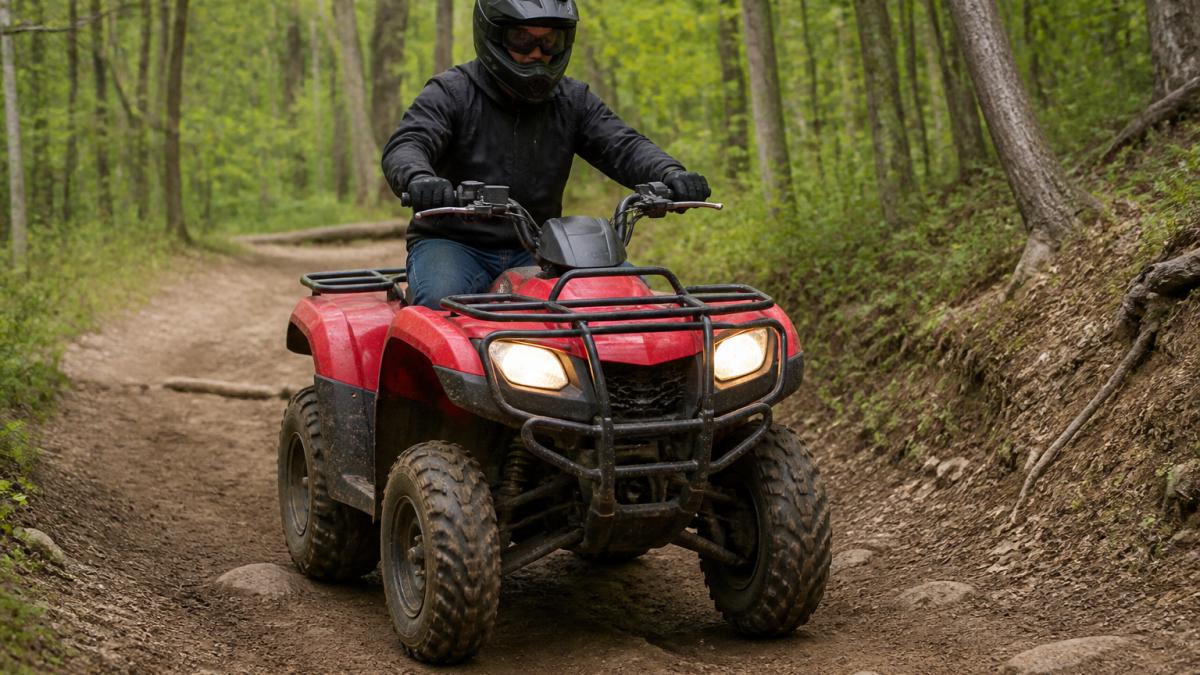
An ATV rider straddles a narrow seat and grips handlebars to steer, more like a motorcycle than a truck.
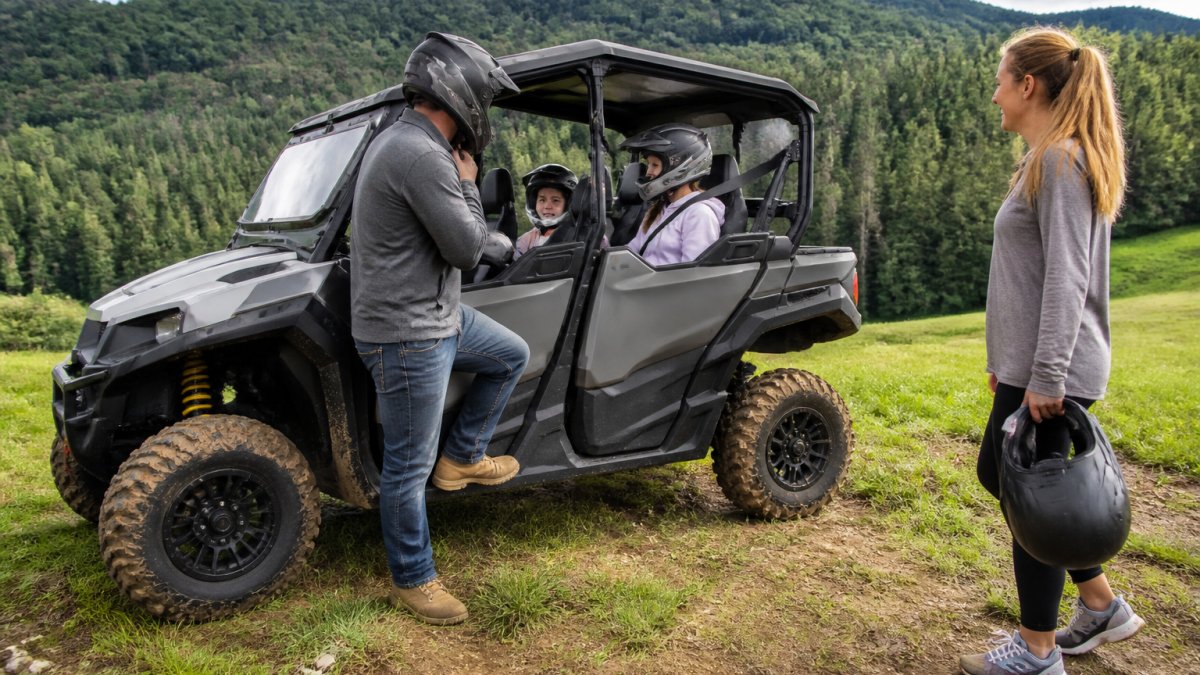
A UTV places passengers side-by-side in bucket seats, similar to a car or truck interior.
If you value agility and the ability to lean into turns, an ATV's handlebars deliver that experience. If you prefer the stability and familiarity of a steering wheel, a UTV is the natural choice.
ATV vs UTV Safety: What You Need to Know
Safety considerations differ between these vehicle types, and understanding the risks helps you choose the right option and ride it responsibly.
ATV Safety: Active Riding and Rollover Risk
ATVs require active rider engagement. The straddle seat and handlebar steering demand that the rider maintain balance and shift body weight through turns, an advantage on technical terrain, but it means the rider bears more responsibility for stability. The most serious ATV risk is rollover, particularly on side slopes, steep descents, or when climbing obstacles.
Protective equipment matters. Many ATV operators wear a helmet, goggles, gloves, boots, and body armor. The vehicle itself typically has minimal passive safety features; some modern ATVs include seat belts, but the primary protection is the rider's gear and judgment.
UTV Safety: Roll Cages, Seat Belts, and Passenger Protection
UTVs offer more passive safety through vehicle design. The side-by-side seating and steering wheel provide inherent stability, and most UTVs include seat belts and a full or partial roll cage designed to protect occupants in a rollover.
Seat belts are not optional in a UTV. In a rollover, an unbelted occupant can be ejected, and the roll cage only protects occupants who stay inside the vehicle. Many UTVs also include doors or nets to keep limbs inside, and some have speed limiters or youth modes for less experienced drivers.
Safe Passenger Practices
Passenger rules differ by vehicle. A single-rider ATV should never carry a passenger; dual-rider ATVs have a designated rear seat and footrests that passengers should use. In a UTV, passengers should sit in designated seats with seat belts fastened, and children should be tall enough for the seat and belt to fit properly. Carrying more passengers than the vehicle is designed for is a common and dangerous mistake.
Helmets, Training, and Legal Requirements
Regardless of vehicle type, wearing a helmet and protective gear is essential. The National Highway Traffic Safety Administration's guidance on ATV safety emphasizes helmet use and operator training as critical injury-prevention measures. Many states require helmets for riders under a certain age, and some require them for all riders on public land. Check your state's rules before you ride.
Neither vehicle is inherently "safer" than the other. An ATV can be safer for an experienced rider on technical terrain where agility matters, while a UTV is often safer for group riding and utility work where stability and passenger protection are priorities.
ATV vs UTV for Trail Riding Performance
ATVs excel on tight, technical trails where maneuverability matters. The lightweight frame, narrow profile, and responsive handlebar steering let the rider pick precise lines through obstacles.
UTVs dominate on wider trails and open terrain where speed and stability are priorities. The broader wheelbase and heavier weight provide confidence at higher speeds, and side-by-side seating lets you enjoy group rides with friends or family.
Solo riders tackling challenging single-track trails choose ATVs. Groups of two or more riding wider trails or property prefer UTVs. Many experienced riders own both for different situations.
ATV vs UTV for Work and Utility Tasks
Work capability is where the UTV's advantages become most apparent.
An ATV can handle light utility work. A typical ATV carries a payload of 100 to 300 pounds and can tow a small trailer.
A UTV is built for serious work. Cargo beds hold 500 to 1,500 pounds of payload, and towing capacity ranges from 1,500 to 3,500 pounds depending on the model.
The UTV's work capability explains its popularity among property owners and contractors. If your primary use is utility work, a UTV is the clear choice. If you need occasional light hauling and prioritize recreation, an ATV may be sufficient.
ATV vs UTV Cost: Ownership and Maintenance
The purchase price is only the entry ticket; insurance, fuel, maintenance, accessories, storage, and repairs determine what the vehicle actually costs you per year.
Purchase Price Ranges
New ATV prices typically start around $4,000 for youth or entry-level models and run to roughly $15,000 for high-performance or utility-focused machines. A common range for adult recreational ATVs is $6,000 to $10,000. New UTVs start higher: entry-level two-seat side-by-sides often begin around $10,000, while four-seat and crew models commonly run $15,000 to $25,000, and premium or high-performance trims can exceed $30,000. Used inventory changes these numbers significantly, but the relative gap holds: a comparable UTV generally costs 50 to 100 percent more upfront than an ATV.
Insurance
ATV insurance premiums are generally lower because the vehicle value and passenger capacity are smaller. A UTV policy costs more not only because the machine is worth more but because it carries multiple occupants and often sees road or property use. Liability limits, comprehensive coverage, and road registration all move the premium. Get quotes for the specific model before you buy; the difference between a base ATV and a crew UTV can be substantial.
Fuel
ATVs are lighter and typically use smaller engines, so fuel consumption is lower. A UTV's extra weight, larger engine, and passenger load raise consumption, especially during work tasks like plowing or towing. Over a season of recreational riding, the fuel gap is modest; over years of daily farm or property work, it adds up.
Maintenance and Wear Items
ATV maintenance is relatively simple: engine oil and filter changes, air filter service, spark plugs, brake pads, and chain or belt adjustment depending on the drivetrain. UTV maintenance involves the same basics plus more components: larger engine oil capacity, transmission and differential fluid changes, more suspension pivots and bushings to inspect, and heavier brake wear when towing or hauling. Service intervals are not necessarily shorter, but each service tends to cost more because of fluid volumes and part counts.
Accessories, Storage, and Repairs
Both vehicle types invite accessory spending: helmets and riding gear for ATVs; cab enclosures, windshields, heaters, and bed accessories for UTVs. A UTV needs more garage or shed space and may need a larger trailer for transport. Repair costs scale with complexity and part prices, and UTV body panels, cabs, and suspension components are generally more expensive to replace.
Total Cost of Ownership
A practical way to compare is to estimate annual cost as purchase price amortized over expected years of ownership plus insurance, fuel, maintenance, and accessories. Most owners find an ATV costs meaningfully less per year to own and operate than a comparable UTV, but a UTV that replaces a pickup truck for property work can justify its higher cost through versatility. Casual riders usually prefer the ATV's lower ownership cost; property owners and frequent users often find the UTV's capability worth the premium.
Which Vehicle Is Right for You?
Choose an ATV if you ride solo or with one passenger, prioritize maneuverability on technical trails, have a limited budget, or need occasional light utility work.
Choose a UTV if you ride with multiple passengers, prefer wider trails and open terrain, need significant cargo or towing capacity, or plan to use the vehicle for work.
Many riders find that owning both provides the best of both worlds: an ATV for solo technical riding and a UTV for group recreation and work. At Flemington Powersports, we carry a full selection of both ATVs and UTVs from trusted brands.
Frequently Asked Questions
What is the main difference between an ATV and a UTV?
An ATV is a straddle-seat, single-rider vehicle controlled with handlebars, while a UTV (side-by-side) is a steering-wheel vehicle that seats multiple passengers side by side. ATVs are lighter, more agile, and better for tight trails. UTVs offer cargo capacity, passenger seating, and greater stability for longer rides and utility work.
Which is safer, an UTV or an ATV?
UTVs generally offer more safety features: a full roll cage, seat belts, and a wider stance for stability on uneven terrain. ATVs have fewer built-in protections and are more prone to rollover on steep slopes. However, safety depends on rider skill, terrain, protective gear, and responsible use. Both require helmets and proper training.
Which costs more to own, an ATV or a UTV?
UTVs typically cost more upfront and to maintain due to larger engines, more complex systems, and higher insurance. ATVs are generally more affordable to purchase and operate. Total cost depends on the model, fuel efficiency, maintenance frequency, and insurance rates in your area.
Can you ride an ATV or UTV with passengers?
Most ATVs are designed for solo riders only, though some models have passenger seats. UTVs (side-by-sides) are built for multiple passengers with dedicated seating, seat belts, and safety features. If you plan to ride with family or friends regularly, a UTV is the safer and more comfortable choice for group outings.
Choosing between an ATV vs UTV requires honest assessment of how you'll use the vehicle. If you're ready to find the right powersports vehicle for your adventures, visit Flemington Powersports or call us to discuss your options. We offer new and pre-owned ATVs and UTVs from Polaris, Can-Am, and other leading brands, plus financing options and expert guidance to help you make the right choice for your riding style.