 blog
7 Best Beginner Motorcycles for New Riders
Last Updated: October 23, 2026
Quick Summary
Beginner motorcycles prioritize manageable power delivery, lightweight construction, and ergonomic design that builds confidence without overwhelming new riders. The best options for most learners range from 300cc to 650cc with 25-50 horsepower, offering smooth acceleration and upright positions that improve visibility and reduce fatigue.
- Seat height should allow both feet to plant flat at stops; subtract 1 inch from your inseam to find your maximum comfortable seat height.
- Most new riders thrive on 300cc-650cc motorcycles with 25-50 horsepower, enough for highway merging without encouraging reckless acceleration.
- Upright standard motorcycles suit all-around learners, lightweight cruisers work best for shorter riders, and dual-sport bikes appeal to adventure-minded beginners.
- Professional training through the Motorcycle Safety Foundation Basic RiderCourse accelerates skill development and often qualifies riders for 10-15% insurance discounts.
- First-year ownership costs include the motorcycle purchase, insurance, protective gear ($600-1,000), training course, maintenance, and registration beyond the bike's price.
Table of Contents
- What Makes a Motorcycle Beginner-Friendly
- How to Choose Your First Motorcycle
- Beginner Motorcycle Engine Size: Finding Your Power Level
- Seven Best Beginner Motorcycles Across Categories
- Used Motorcycles for Beginners: New vs. Pre-Owned
- Beginner Motorcycle Safety Gear and Training
- Total Cost of Ownership for Your First Bike
- Frequently Asked Questions
What Makes a Motorcycle Beginner-Friendly
A beginner-friendly motorcycle prioritizes accessibility over raw performance, combining manageable power delivery, lightweight construction, and ergonomic design that builds confidence without overwhelming new riders.
Lower seat heights let riders touch the ground at stops, lighter weight makes low-speed maneuvering achievable, upright positions reduce fatigue and improve visibility, and predictable throttle behavior prevents sudden acceleration.
Engine displacement matters less than how that power arrives: a 500cc bike with smooth delivery suits beginners better than a 300cc bike with jerky throttle response. Modern beginner motorcycles balance these factors intentionally, since retention depends on making early rides enjoyable rather than terrifying.
How to Choose Your First Motorcycle
Selecting your first motorcycle requires matching physical fit, intended riding style, and honest commitment level. Rush it and you'll either outgrow the bike within months or struggle with a machine that doesn't suit you.
Seat Height and Rider Fit
Seat height determines whether you can plant both feet flat at a stop. Toes barely touching means instability on inclines or turns; a forced permanent leg bend brings fatigue within 20 minutes.
Measure your inseam, then subtract 1 inch for your maximum comfortable seat height: a 28-inch inseam suggests 27-inch seats or lower. Many beginner motorcycles offer adjustable seats or lowering kits, but verify these options exist before committing to a model that leaves you on your tiptoes.
Handlebar reach matters equally: too far forward strains your neck and back, too close feels cramped. Test ride multiple bikes in your size range, and if a dealership won't let you sit on bikes first, find one that will.
Weight and Handling
Lighter bikes respond faster to steering inputs and need less effort to hold upright at low speeds. Riders with less upper-body strength benefit from bikes under 400 pounds; taller or stronger riders can manage up to 500 pounds.
Weight distribution matters as much as total weight: a bike with weight concentrated low near the engine feels more planted. Cruisers sit lower and feel stable; sport bikes sit higher and demand precise inputs.
Test maneuverability in parking lots before committing: can you control it at walking speed, and does it feel stable stopped on a slight incline?
Riding Position and Ergonomics
Three riding positions dominate beginner motorcycles. Upright positions reduce arm fatigue, improve visibility, and make slow-speed control intuitive. Sport positions work on track but exhaust new riders on commutes. Cruiser positions suit highway cruising but limit aggressive cornering.
Beginners typically thrive on upright or standard motorcycles, which let you relax your arms, plant your weight naturally, and keep good visibility.
Test ergonomics on a 30-minute ride if possible: a showroom-comfortable position may cause shoulder or wrist pain after an hour. Pain signals a mismatch, so don't ignore it.
Beginner Motorcycle Engine Size: Finding Your Power Level
Displacement, measured in cubic centimeters (cc), indicates engine volume but not actual power output: a modern fuel-injected 500cc makes more horsepower than a 20-year-old carbureted 500cc. Focus on horsepower and torque figures rather than displacement alone.
Most new riders thrive on 300cc-650cc motorcycles with 25-50 horsepower, enough for highway merging without encouraging reckless acceleration. Bikes under 300cc often feel underpowered on highways; bikes over 650cc with 60-plus horsepower forgive mistakes less readily.
Power delivery matters more than peak horsepower: smooth, progressive power suits learners, while abrupt on-off delivery catches new riders off guard. Modern fuel injection typically offers predictable, confidence-building power curves.
Torque affects low-speed maneuverability: strong low-end torque pulls smoothly from a stop, while weak low-end torque demands finesse and stalls easily.
Seven Best Beginner Motorcycles Across Categories
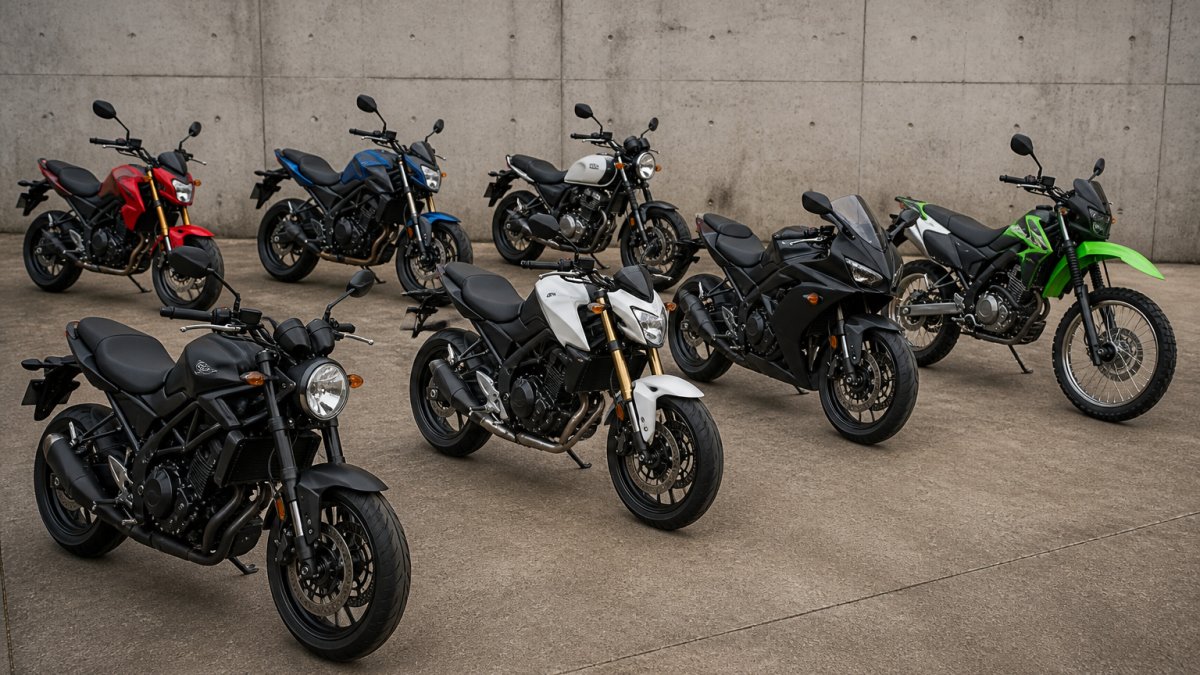
We've evaluated beginner motorcycles across three riding styles for real-world usability, reliability, and learning-curve friendliness.
| Motorcycle Type | Seat Height | Weight | Engine | Best For |
|---|---|---|---|---|
| Upright Standard | 28-31 inches | 350-420 lbs | 400-650cc | All-around learners |
| Lightweight Cruiser | 26-28 inches | 320-380 lbs | 300-500cc | Shorter riders, casual cruising |
| Dual-Sport | 30-33 inches | 340-420 lbs | 250-650cc | Adventure-minded riders |
Upright Standard Motorcycles for All-Around Versatility
Standard motorcycles sit at the heart of beginner-friendly design: upright position, moderate power delivery, and balanced geometry make them ideal first bikes for most new riders, handling highway riding, commuting, and weekend cruising on one platform.
The Honda CB500F is the gold standard for beginner standards: a 471cc parallel-twin producing 47 horsepower with smooth, linear delivery. The 31-inch seat suits riders 5'6" and taller, and at 408 pounds it responds quickly without demanding extraordinary strength.
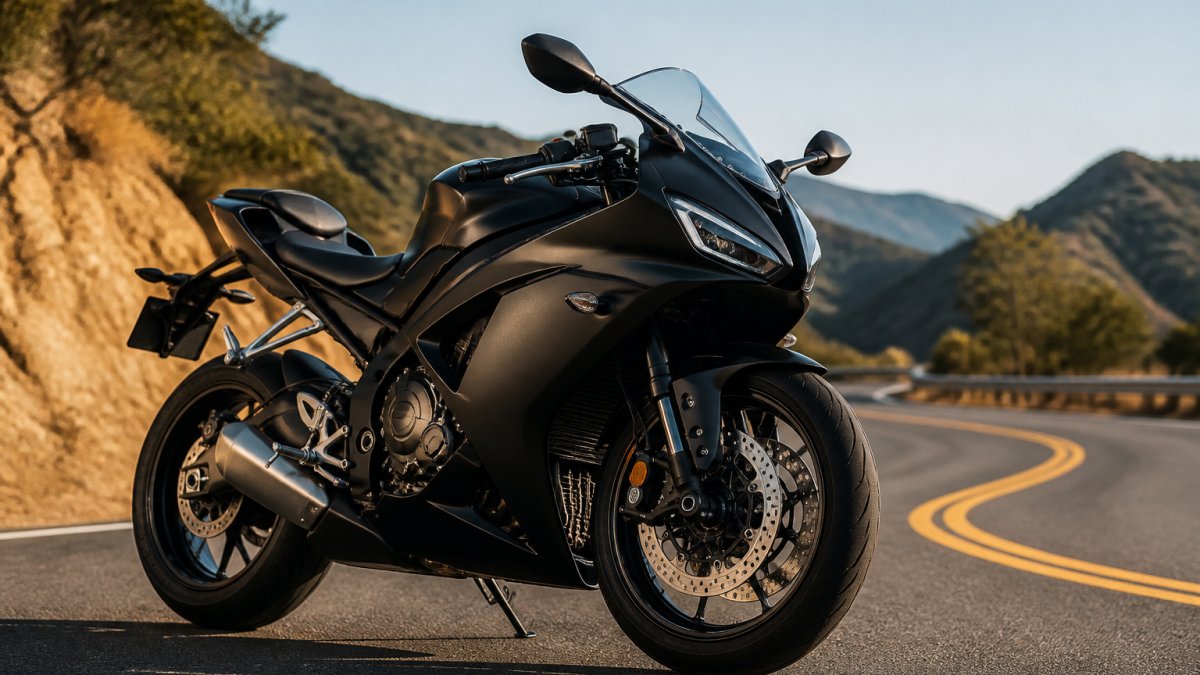
Kawasaki's Ninja 400 offers sportier ergonomics without abandoning beginner-friendliness: a 399cc single producing 45 horsepower, a 31.5-inch seat, and 366 pounds make it accessible to most new riders. The sport position teaches cornering technique earlier than upright bikes.
Yamaha's MT-07 bridges beginner and intermediate riding: a 689cc parallel-twin producing 75 horsepower, more than most true beginner bikes but less aggressive than liter-class sport bikes.
Lightweight Cruisers for Easy Maneuverability
Cruisers emphasize low-speed stability and a relaxed position: forward-set pegs and high handlebars reduce arm fatigue, and lower seat heights (often 26-28 inches) make them accessible to shorter riders.
The Honda Rebel 500 defines beginner cruiser excellence: a 471cc parallel-twin producing 46 horsepower with smooth, manageable delivery.
Suzuki's Boulevard S40 offers classic cruiser styling: a 652cc V-twin producing 39 horsepower, distributed low for easier low-speed control. The 27.6-inch seat matches the Rebel's accessibility, and at 425 pounds it feels more stable in crosswinds.
Yamaha's V Star 250 is the smallest viable cruiser: a 249cc V-twin producing 20 horsepower, with a 28-inch seat and 297 pounds making it the most accessible option for petite riders or those with limited upper-body strength.
Dual-Sport Bikes for Adventure-Ready Beginners
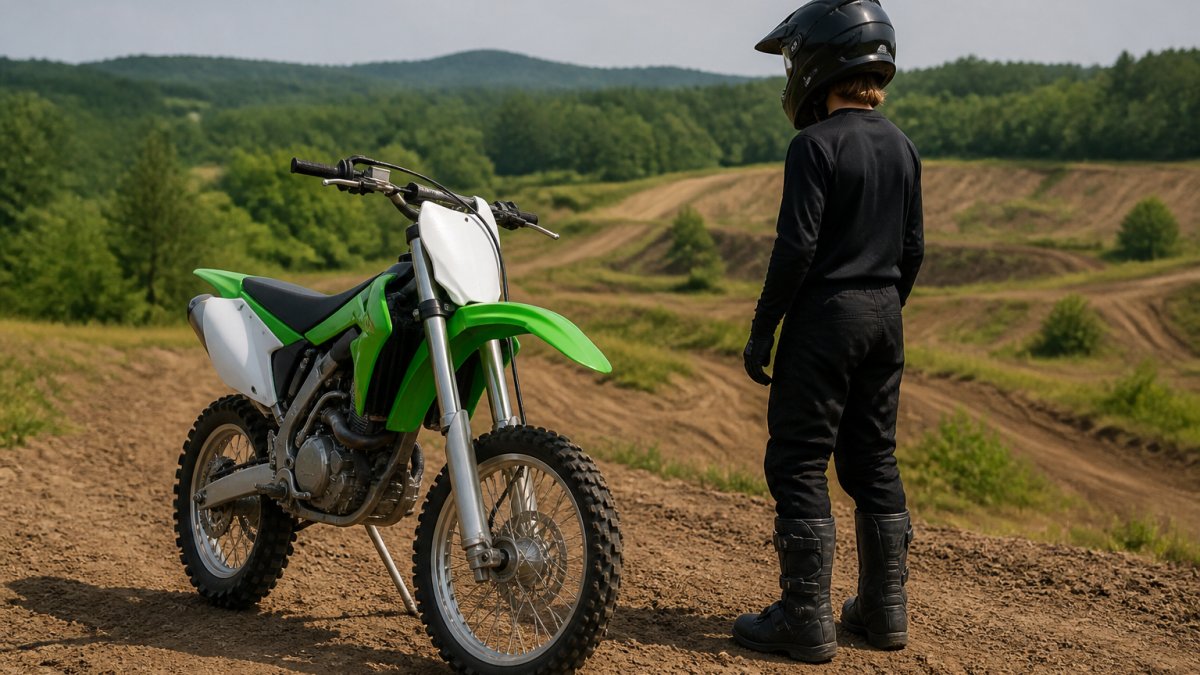
Dual-sport motorcycles blend street-legal riding with unpaved capability: upright positions, moderate power delivery, and long-travel suspension suit beginners seeking adventure beyond pavement. Explore the best dirt bikes for beginners if you're interested in off-road options alongside street riding.
The Kawasaki KLR650 has educated generations of adventure riders: a 652cc single producing 40 horsepower with strong low-end torque. The 32.2-inch seat suits riders 5'8" and taller, and at 420 pounds it rewards smooth inputs with predictable performance.
Honda's CB500X adapts the CB500 standard platform for adventure. Its 471cc parallel-twin produces 47 horsepower. The 32.6-inch seat height and 408-pound weight sit between the KLR and lighter standards.
Yamaha's Ténéré 700 is the premium dual-sport option for committed adventure riders: a 689cc parallel-twin producing 73 horsepower, with a 33.1-inch seat and 409 pounds demanding comfort with larger bikes.
Used Motorcycles for Beginners: New vs. Pre-Owned
New motorcycles arrive with warranties and predictable maintenance; pre-owned bikes cost significantly less but require inspection expertise many beginners lack.
New motorcycles suit riders prioritizing reliability and simplicity: you know the bike's history, understand the warranty, and can focus on riding skills rather than diagnosing mechanical issues. New bikes typically include ABS, fuel injection, and learning-friendly ergonomics.
Pre-owned motorcycles appeal to budget-conscious buyers and those comfortable assessing mechanical condition. However, pre-owned bikes require thorough inspection before purchase, checking for accident history, service records, and mechanical soundness. Learn how to check used motorcycle condition before committing to a pre-owned purchase.
At Flemington Powersports, we maintain an extensive inventory of pre-owned motorcycles from trusted manufacturers including Suzuki, Kawasaki, Honda, Yamaha, and Harley-Davidson.
Beginner Motorcycle Safety Gear and Training
Protective gear separates minor injuries from life-altering trauma.
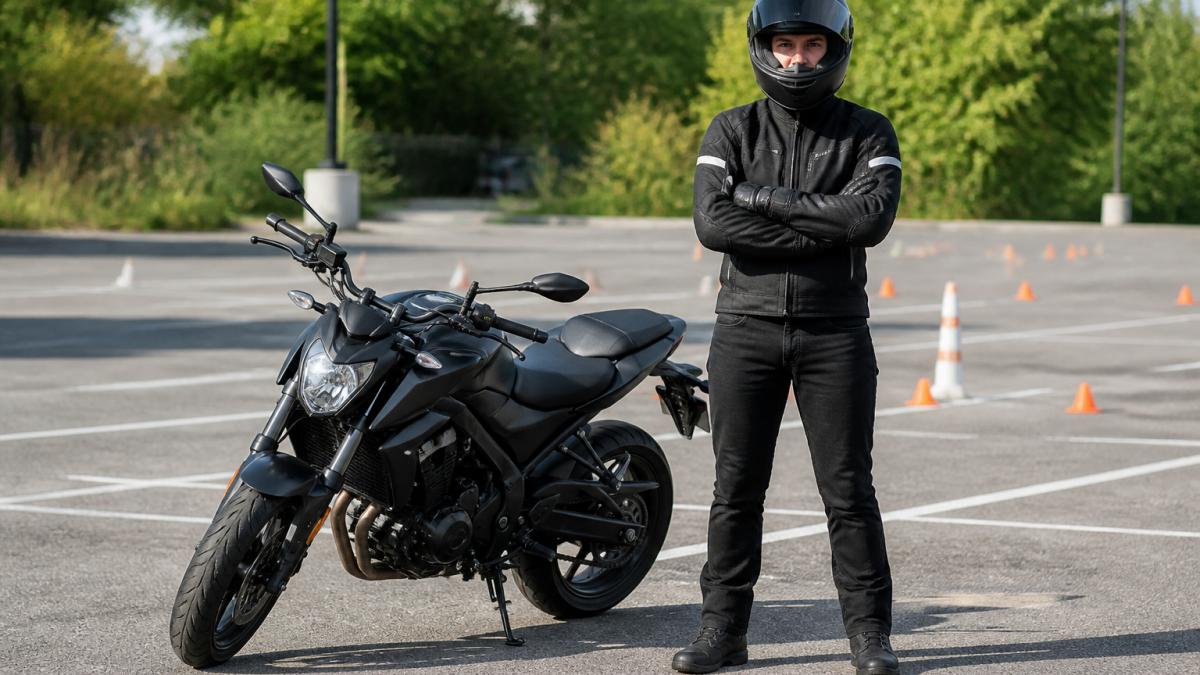
A quality full-face helmet provides impact protection and weather shielding. DOT certification meets minimum standards, but premium helmets offer better ventilation and comfort. Budget $150-300 for a helmet you'll actually wear consistently.
Armored jackets shield shoulders, elbows, and back during slides. Textile offers weather protection; leather provides superior abrasion resistance but requires maintenance. Budget $200-400 for a properly fitting jacket.
Gloves protect your hands during instinctive crash reactions. Your hands typically hit first, and unprotected palms suffer severe road rash. Quality motorcycle gloves cost $80-150 and should feature reinforced palms and knuckle protection.
Boots protect ankles and feet from exhaust burns, impacts, and abrasion. Motorcycle-specific boots provide ankle support and reinforced toe boxes that street shoes lack. Budget $100-200.
Professional training accelerates skill development while building confidence safely. Most states offer licensing reciprocity for riders completing approved courses, and insurance companies often discount premiums for course completion. Motorcycle Safety Foundation Basic RiderCourse provides locations and scheduling information nationwide.
Total Cost of Ownership for Your First Bike
Purchase price is only part of first-year ownership costs; insurance, maintenance, fuel, and gear add significantly to the total.
Insurance varies by bike type, age, driving record, and coverage. New riders pay higher premiums, and cruisers often cost less to insure than sport bikes.
Routine maintenance includes oil changes every 3,000-6,000 miles, tires at $200-400 per pair, and chain cleaning and lubrication. Budget for these predictable expenses.
Protective gear is a one-time investment with periodic replacement: budget $600-1,000 for a complete setup (helmet, jacket, gloves, boots), which lasts 3-5 years with proper care.
Registration and licensing vary by state: most charge $50-150 annually for registration, and licensing tests cost $20-50.
New riders often underestimate first-year costs. A realistic budget covers the motorcycle, insurance, gear, training course, maintenance, and registration; spreading these across 12 months reveals whether ownership fits your finances.
Choosing your first motorcycle determines whether you'll develop into a lifelong rider or abandon the hobby within months. Visit us to test ride motorcycles in your size range and discuss which platform aligns with your learning style and adventure plans. Motor Bike Second Hand for Sale: 2026 Buyer's Guide showcases available inventory, and our team stands ready to answer questions about fit, maintenance, and long-term ownership costs.
Frequently Asked Questions
What engine size is best for a beginner motorcycle?
Most riding experts recommend starting with 300cc to 500cc for new riders. This range offers enough power for highway riding and good fuel economy without overwhelming throttle response. Lighter displacement bikes under 300cc suit shorter riders or those seeking minimal maintenance costs. Avoid 600cc and above as a first bike, the power delivery and weight make them harder to control during the learning phase.
Should a beginner buy a new or used motorcycle?
Both options work for beginners. New motorcycles come with warranty coverage and predictable maintenance schedules, which reduces ownership stress. Used motorcycles for beginners cost less upfront and are forgiving if dropped during practice. Many first-time riders prefer used bikes to build confidence without worrying about cosmetic damage. Inspect any used motorcycle thoroughly for maintenance history and frame damage before purchasing.
What safety gear does a new motorcycle rider need?
Essential beginner motorcycle safety gear includes a DOT-certified helmet, abrasion-resistant jacket, gloves, reinforced pants, and over-the-ankle boots. A helmet is non-negotiable, it reduces head injury risk by 69%. Mesh jackets with armor offer comfort in warm weather while protecting vital areas. Many riders also invest in a spine protector and kidney belt for added protection during training rides.
Are lightweight motorcycles easier for beginners to ride?
Yes. Lightweight motorcycles under 350 pounds are significantly easier to handle at low speeds, during parking, and if you drop the bike. Lower weight reduces the physical effort needed for balance and maneuverability, which is crucial while building muscle memory. Heavier cruisers and touring bikes demand more strength and spatial awareness, making them less ideal for riders still developing foundational skills.